

Low Hot Water Pressure: Causes and Fixes You Can Try
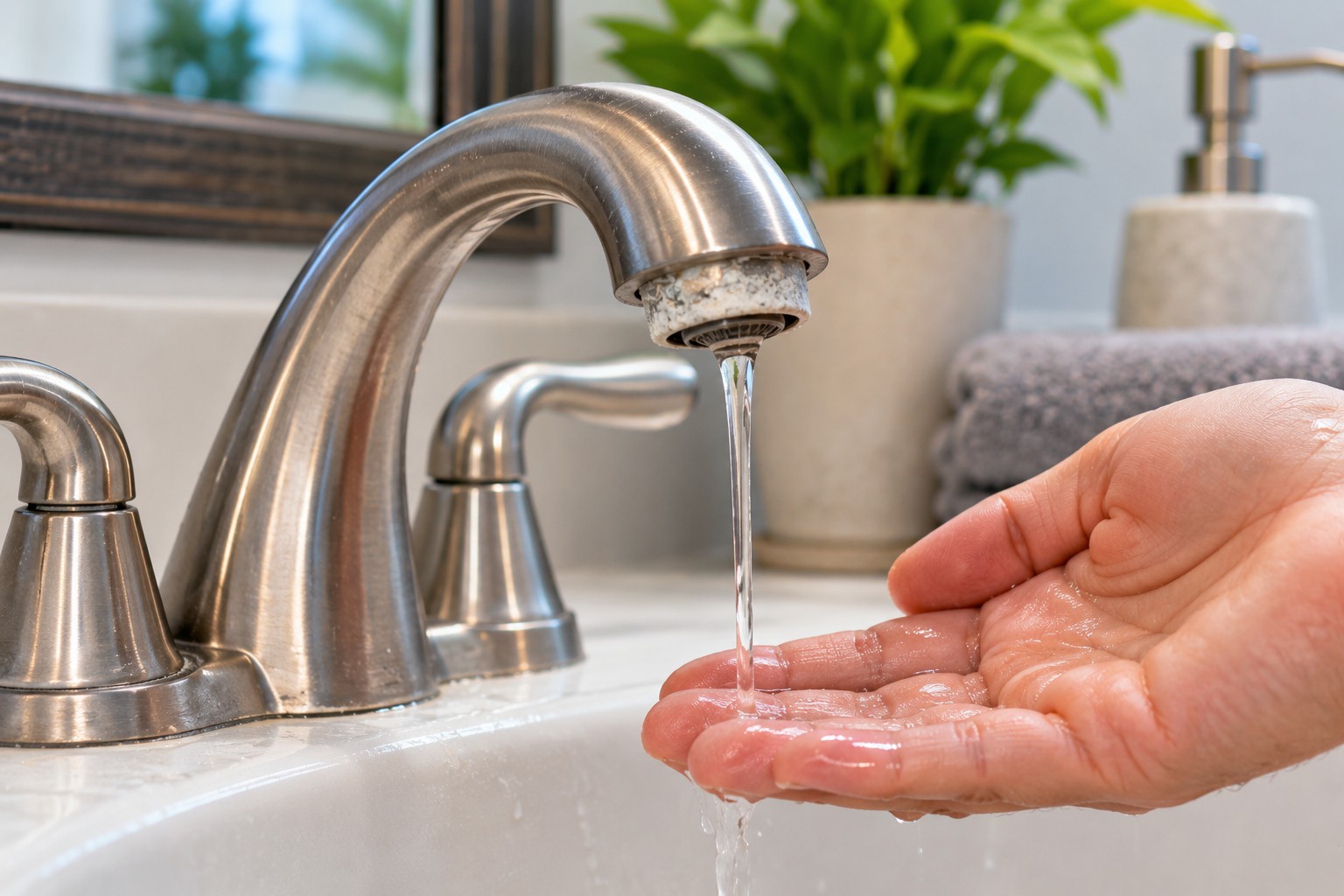
Low hot water pressure is almost always a restriction on the hot side of your plumbing, not a failing water supply, because cold water bypasses the water heater and keeps flowing normally. The culprit is often a partly closed valve, a clogged showerhead, or mineral buildup, and several fixes take only minutes. Work through the causes in order and you can usually find the problem without special tools.
What Causes Low Hot Water Pressure?
Low hot water pressure usually comes from a partly closed valve, a clogged aerator or showerhead, or mineral scale in the water heater or hot-side pipes. Cold water bypasses the heater, so any restriction on the hot path cuts hot flow while cold stays normal.
Low Hot Water Pressure in One Fixture vs. the Whole House
Where the weak flow shows up tells you where to look first.
| What You Notice | Likely Problem Area | First Check |
|---|---|---|
| Weak hot water at one fixture, normal elsewhere | Aerator, showerhead, or shower cartridge | Clean the aerator or showerhead, then inspect the cartridge |
| Weak hot water everywhere, cold is normal | Water heater valves, the heater, or hot-water lines | Open the heater valves fully, then flush the tank |
| Weak hot and cold at one fixture | The fixture, its stop valves, or its supply line | Open the stop valves and inspect the supply line |
| Weak hot and cold everywhere | Main shut-off, pressure reducing valve, supply line, or a leak | Check the main valve and read a pressure gauge |
| Hot flow drops when another fixture runs | Tankless flow limit, undersized pipes, or heavy demand | Check the heater’s flow rating and pipe size |
Why Hot Water Can Feel Weak When Pressure Is Normal
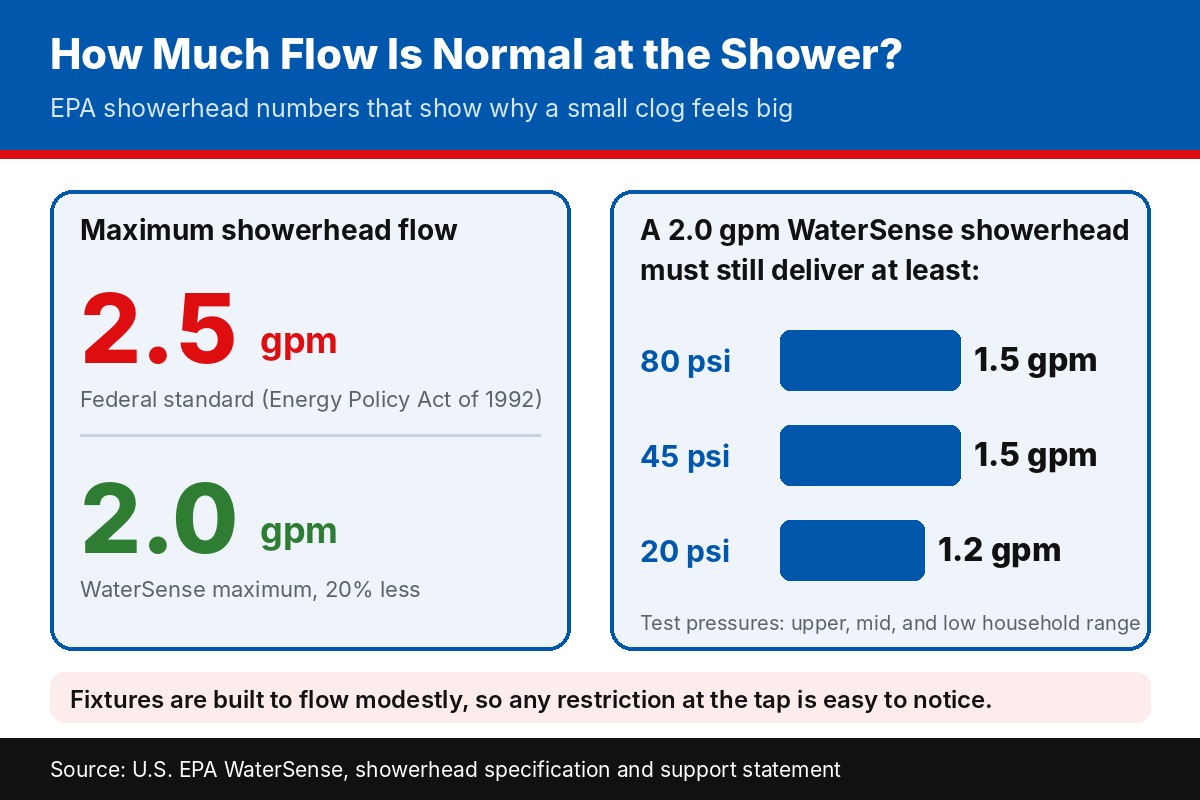
Not every weak shower is a pressure problem. Hot water sits in the pipes between the heater and the fixture, and that cooled water has to clear before hot water arrives, which can feel like poor flow. Fixtures are also built to flow modestly. The federal maximum for showerheads is 2.5 gallons per minute, and WaterSense models cap at 2.0, so a small clog or a partly closed valve is easy to notice.
Tankless heaters add another factor. If the unit cannot reach the set temperature at the current flow, it reduces output, and that registers at the tap as lower pressure. This is most noticeable when two fixtures run at once.
Check the Valves First: The Fastest Fix for Low Hot Water Pressure
A partly closed valve is the cheapest cause to rule out, and it often looks fine from across the room. Every drop of hot water leaves the tank through one pipe, so a valve that is only slightly closed on that path affects every hot fixture in the house.
Water Heater Shut-Off Valves
Storage tank heaters have a cold-water inlet valve above the unit, and many also have a valve on the hot outlet. These get closed during repairs and are not always reopened all the way, or a handle gets bumped. Check both before you try anything else.
Gate Valves vs. Ball Valves
Older homes often have gate valves, which lower a metal gate into the flow and take several full turns to open. Over time the gate can corrode or break away from the stem, so the handle turns freely while the valve stays partly shut. Modern brass ball valves turn a quarter turn, and a lever parallel to the pipe means fully open. If a gate valve feels stiff, do not force it, because it can fail in the closed position. Replacing it with a ball valve is a quick, inexpensive upgrade.
Checklist for Checking Your Valves
- Find the cold-water shut-off valve above the water heater and open it fully. Turn a wheel handle counter-clockwise, or set a lever parallel to the pipe.
- Find the hot-water outlet valve, if there is one, and confirm it is fully open too.
- Check the main water shut-off where the line enters the home.
- Check the small stop valves under the sink or behind the toilet that feed the weak fixture.
- Look for sectional valves in the basement or crawl space that control zones of the house.
Mineral Scale and Sediment: How Hard Water Cuts Hot Water Flow
How Hard Water Restricts Hot Water Flow
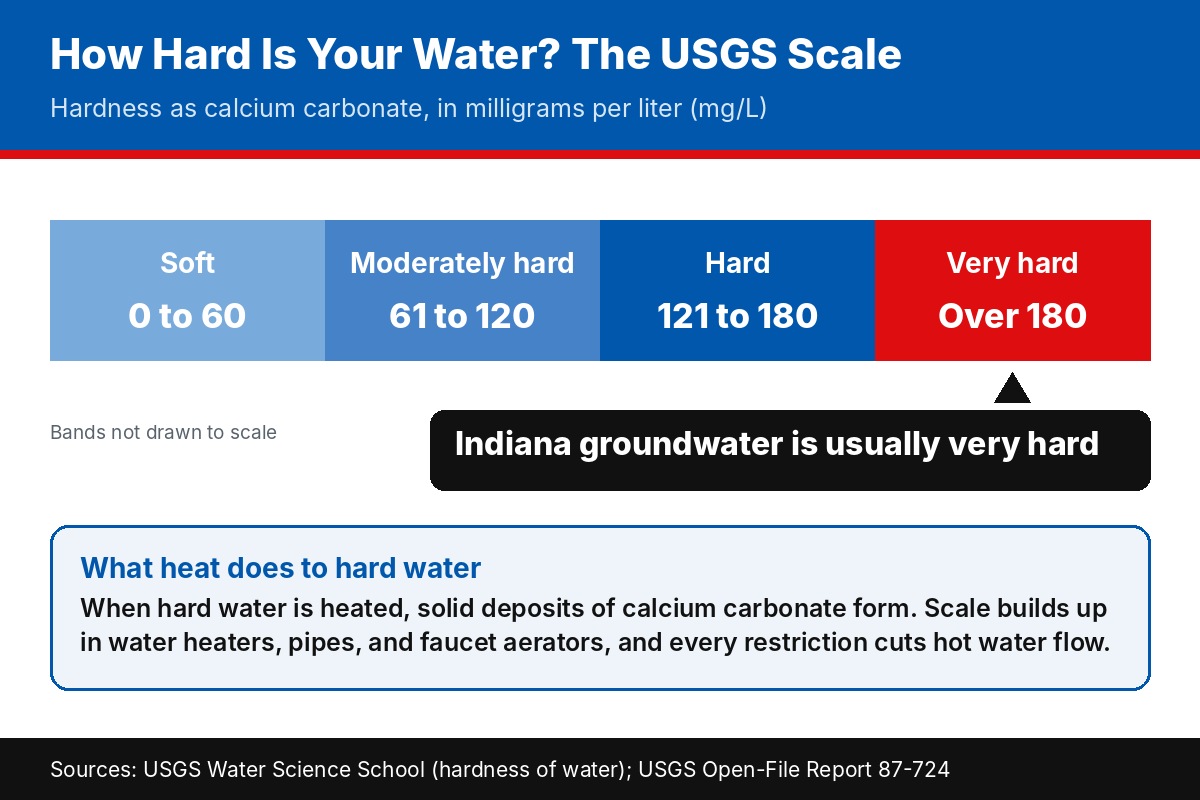
When hard water is heated, calcium carbonate comes out of solution and forms solid deposits. The U.S. Geological Survey notes that this scale builds up in water heaters, pipes, and faucet aerators, and groundwater in Indiana is usually classified as very hard, above 180 mg/L. Hot water carries that scale to the narrowest openings, which is why aerators, showerhead nozzles, and tankless heat exchangers clog first.
Clogged Aerators and Showerheads
If only one fixture is weak, scale is the likeliest cause. Unscrew the aerator or showerhead, rinse out loose grit, and soak the parts in white vinegar until the white crust softens, then rinse and reinstall. Check the manufacturer’s finish guidance first, since vinegar can damage some plated or oil-rubbed finishes. A failing dip tube inside the water heater can also shed plastic bits that clog these screens.
Sediment in the Water Heater
Sediment settles at the bottom of the tank, so it rarely blocks the outlet on its own. It does shorten hot water supply, stress the tank, and shed flakes that travel into your lines. A yearly flush keeps it under control, and homes with very hard water benefit from flushing every six months. The basic process:
- Turn off the electric breaker, or set a gas unit as the owner’s manual directs.
- Close the cold-water inlet valve and open a hot faucet.
- Attach a hose to the drain valve and run it to a floor drain or outside, ending lower than the tank.
- Drain the tank, then briefly open the inlet to stir sediment, repeating until the water runs clear.
- Close the drain valve and let the tank fill completely before restoring power or gas.
If the drain valve clogs, will not close, or the tank has gone years without a flush, a technician can handle it safely. Schneider offers professional water heater flush and valve service for tanks that need more than a basic flush.
Tankless Heaters: Scale Cuts Flow Fast
A tankless heater has a small heat exchanger that scale coats quickly in hard water. The unit then reduces flow to reach the set temperature, and the result looks like weak hot pressure. Descaling on the manufacturer’s schedule restores the full flow rate.
Hidden Causes of Low Hot Water Pressure
Worn Shower Cartridge or Mixing Valve
If hot is weak only in the shower, the cartridge or mixing valve may be restricted by scale or worn out. Other signs are a stiff handle, drips from the spout, or temperature swings. Shower valve repairs typically cost $150 to $350.
Failing Pressure Reducing Valve
A pressure reducing valve (PRV) near the main shut-off lowers incoming pressure to a safe level. When it fails, both hot and cold change at every fixture, often with banging pipes or sudden swings. Adjusting a PRV takes a gauge and experience, because the wrong setting stresses pipes or leaves the whole house weak. Replacement typically costs $200 to $700.
Corroded Galvanized Pipes
Older homes with galvanized steel supply lines can develop rust and scale inside the pipe, narrowing the opening a little more each year. This usually shows up as weak flow at several fixtures, and hot lines often suffer first because heat speeds corrosion. Once the pipe is badly narrowed, the lasting fix is to repipe corroded galvanized lines.
Hidden Leaks Bleeding Off Pressure
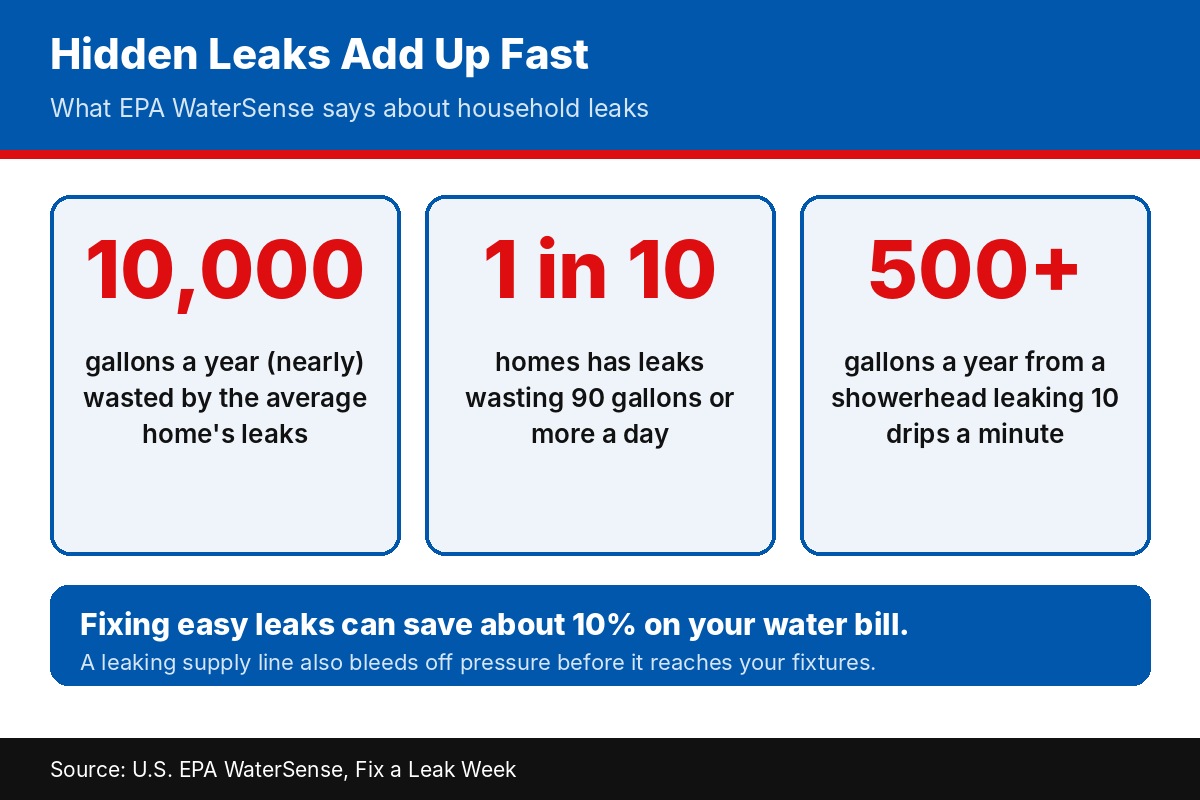
A leaking hot-water pipe or supply line wastes flow before it reaches your fixtures. EPA WaterSense reports that the average home loses nearly 10,000 gallons a year to leaks and that 1 in 10 homes leaks 90 gallons or more a day. Damp drywall, musty smells, or a rising water bill are clues. A technician can locate a hidden leak without tearing into walls, and a damaged underground feed may require a team that can repair a damaged main water line.
Clogged Filters and Softener Problems
Whole-house filters, sediment cartridges, and water softeners can all restrict flow when they clog or foul, and they affect hot and cold alike. If pressure dropped right after a filter change or a softener regeneration problem, check that equipment first.
How to Fix Low Hot Water Pressure Step by Step
Work from the simplest, cheapest checks to the most involved. Most homeowners find the cause in the first four steps.
- Compare hot and cold at the same fixture: Run each side separately at the weakest fixture. Normal cold with weak hot points to the hot side. Weak on both points to the fixture, its supply line, or the whole house.
- Test other fixtures: Check hot flow at a kitchen sink, a bathroom sink, and the shower. One weak fixture means a local clog. Every weak fixture means the water heater or the hot-water lines.
- Open every water heater valve fully: Confirm the cold inlet and hot outlet valves at the water heater are fully open. A lever parallel to the pipe is open.
- Clean the aerator and showerhead: Unscrew each one, rinse out grit, and soak the parts in white vinegar until the mineral scale softens, then reinstall.
- Check the main and fixture shut-off valves: Make sure the main shut-off where the line enters the home and the small stop valves under the fixture are fully open.
- Flush the water heater: Drain the tank until the water runs clear to remove sediment that can shed flakes into your lines. Follow the owner’s manual.
- Look for leaks and measure pressure: Check under sinks and around the water heater for moisture, and read a pressure gauge on an outdoor spigot.
- Call a licensed plumber: If hot flow is still weak, a technician can test the pressure reducing valve, shower valve, and supply lines.
Low Hot Water Pressure Repair Costs
These are typical national ranges. The final price depends on access, parts, and what the technician finds.
| Fix | DIY or Pro | Typical Cost |
|---|---|---|
| Open a partly closed valve | DIY | Free |
| Clean aerators and showerheads | DIY | A few dollars for vinegar or a new aerator |
| Flush the water heater | DIY with care, or pro | $75 to $250 for a professional flush |
| Shower cartridge or valve repair | Pro recommended | $150 to $350 |
| Pressure reducing valve replacement | Pro | $200 to $700 |
| Replace a worn gate valve | Pro | Quoted after inspection |
| Repipe corroded galvanized lines | Pro | Quoted after inspection |
When to Call a Plumber for Low Hot Water Pressure
Call a licensed plumber if the weak flow continues after the valve, fixture, and flush checks, or if you see any of these signs:
- Pressure is weak at both hot and cold across the whole house.
- You suspect a leak, such as damp walls, pooling water, or a rising water bill.
- A gate valve is stuck or the drain valve will not close.
- The pressure reducing valve needs testing or adjusting.
- Hot water pressure drops suddenly, or the water heater is leaking.
Schneider Plumbing Heating & AC is a family-owned plumbing and HVAC company that has served homeowners since 1948, and urgent plumbing calls get same-day attention around the clock. Technicians test pressure with a gauge, trace the restriction to its source, and explain the fix before any work starts.
“We gave Schneider a call and they sent someone out the same day. Wade and Matt were very helpful and got the job done quickly.”
Kimberly Hurley, Schneider customer
“Called on a holiday weekend and Alex arrived in under an hour. He assessed the situation and provided a fix until they could come back on Monday for a permanent solution, which he explained to our satisfaction with no pressure to accept.”
Katie Wendling, Schneider customer
How to Prevent Low Hot Water Pressure
Most pressure problems build slowly. A short yearly routine catches them before the shower gets weak.
| Task | How Often | Why It Matters |
|---|---|---|
| Flush the water heater | Once a year, or every 6 months with very hard water | Clears sediment before it sheds flakes or hardens |
| Clean aerators and showerheads | Every few months in hard water | Removes scale before it narrows the openings |
| Check pressure with a gauge | Once a year | Catches a failing pressure reducing valve early |
| Replace old gate valves | When they feel stiff or stuck | Prevents hidden partial closure and emergency failures |
| Descale a tankless heater | On the manufacturer’s schedule | Keeps full flow at the set temperature |
Treat Hard Water at the Source
Scale is the main reason hot flow declines over the years. A whole-home water softener removes calcium and magnesium before the water reaches your heater, aerators, and showerheads.
Schedule the Checkups
Flushes and pressure checks are easy to forget. The Schneider Advantage Plan covers routine inspections and priority scheduling, so your water heater and plumbing get checked every year.
Low Hot Water Pressure FAQs
Why is my hot water pressure low but cold is fine?
Why is the hot water pressure low in only the shower?
Can a water heater cause low hot water pressure?
How do I increase hot water pressure?
How do I know if my pressure regulator is bad?
What water pressure is normal in a house?
How much does it cost to fix low hot water pressure?
Can low hot water pressure mean a leak?
Get Your Hot Water Flowing Strong Again
Weak hot water is solvable, and the cause is usually simpler than the frustration it creates. Contact the Schneider team to schedule a visit, and we will find the restriction and tell you straight what it takes to fix it.