

Water Heater Popping Noise: Causes, Dangers, and Fixes
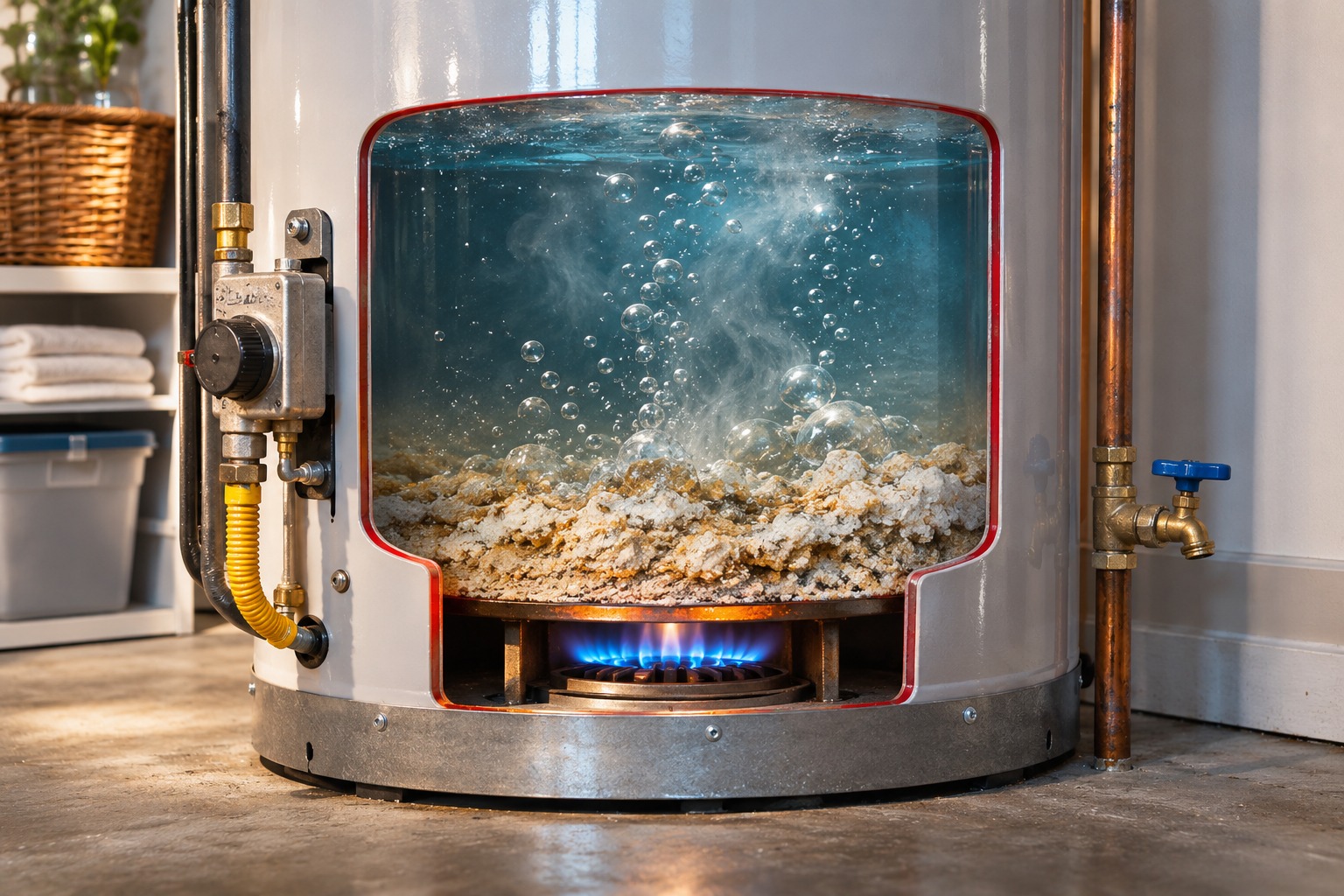
Water heater popping noise almost always means sediment has hardened at the bottom of your tank and steam bubbles are breaking through it every time the burner or lower element heats. The sound is common, rarely an emergency, and fixable, but ignoring it shortens the life of the tank and raises your energy bill. A flush often quiets the tank, and a licensed plumber can tell you quickly whether it will.
What Causes a Water Heater Popping Noise?
Sediment causes a water heater popping noise. Hard water minerals settle at the bottom of the tank, harden into scale, and trap water underneath. When the burner or lower element fires, that trapped water flashes to steam and bursts through the scale with a pop.
How Sediment Turns Into Popping and Rumbling
Cold water carries dissolved calcium and magnesium without any trouble. Heat changes that. Here is the sequence inside your tank:
- Minerals separate: as the water heats, calcium and magnesium carbonate come out of solution and sink to the bottom.
- Scale forms: repeated heating cycles compress the deposits into a hard, rocky layer of calcium carbonate.
- Water gets trapped: pockets and channels under the crust hold water directly above the heat source.
- Steam bursts through: the trapped water boils almost instantly, and each bubble that breaks the crust makes a pop or crack.
A thin layer pops and crackles. A thick, uneven layer produces the low, rolling rumble many homeowners describe as boiling or kettling. The thicker the crust, the louder and more frequent the noise.
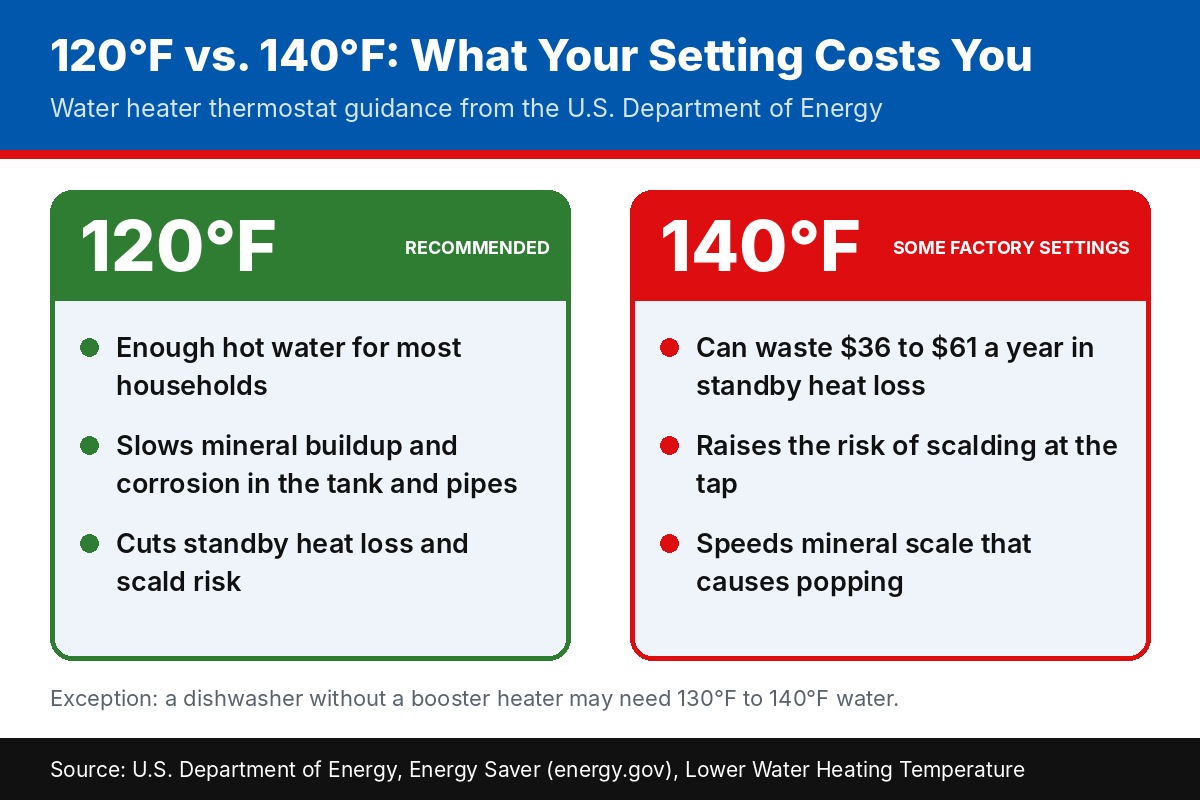
Temperature plays a part too. The U.S. Department of Energy notes that a 120°F setting slows mineral buildup and corrosion, while a 140°F setting can waste $36 to $61 a year in standby heat loss and raises scald risk.
Gas vs. Electric Water Heater Popping: What Changes
Both fuel types collect sediment, but the sound and the damage show up differently.
| Water Heater Type | Where Sediment Hurts | What You Hear | Other Symptoms |
|---|---|---|---|
| Gas tank | The burner fires beneath the tank, so heat has to pass through the scale layer | Popping or rumbling each time the burner lights | Hot spots on the tank floor, longer burn cycles, higher gas bills |
| Electric tank | The lower heating element sits in or just above the sediment | Popping, sizzling, or crackling when the lower element energizes | Burned-out lower element, lukewarm water, hot water that runs out fast |
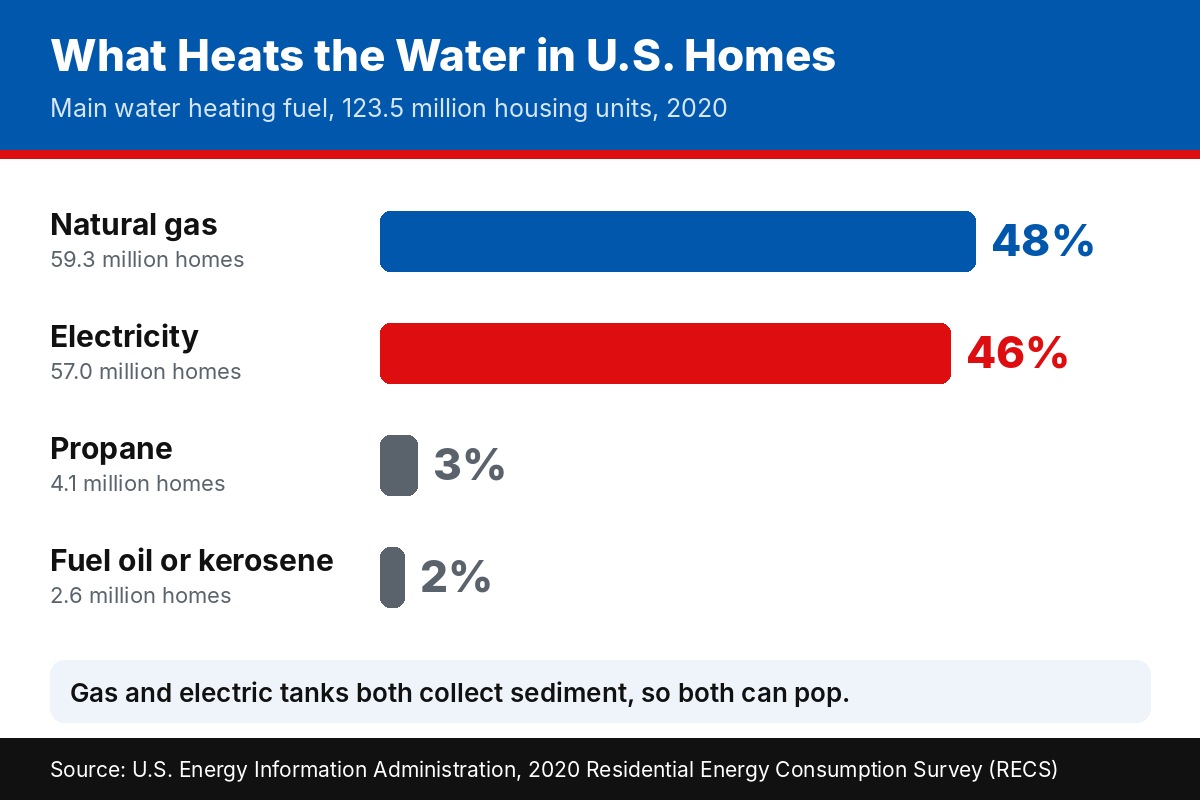
Natural gas is the main water heating fuel in 48% of U.S. homes and electricity in 46%, so a popping tank is a problem for most households. The fix starts the same way for both: remove the scale.
Is a Popping Water Heater Dangerous?
A popping water heater is rarely an explosion risk, but it is a warning sign. Tank water heaters have a temperature and pressure (T&P) relief valve that opens before pressure reaches dangerous levels. The real risk is slow damage: overheated steel, a cracked lining, corrosion, and eventually a leak.
What Sediment Does to Your Tank Over Time
- Thermal stress: the scale layer insulates the bottom of the tank, so the steel runs hotter than designed and the glass lining can crack.
- Corrosion: once the lining fails, water touches bare steel, rust starts, and the tank wall thins until it leaks.
- Failed safety valve: a T&P valve that has never been tested can seize shut and fail to open when it is needed.
- Wasted energy: sediment forces longer heating cycles, and that extra run time shows up on every utility bill.
Warning Signs That It Is More Than Noise
Popping plus any symptom below means the tank needs attention sooner rather than later.
| Symptom | What It May Mean | What to Do |
|---|---|---|
| Water pooling around the base of the tank | A pinhole leak or a failed tank | Shut off the water supply to the heater and its power or gas, then call a plumber the same day |
| Steam or water coming from the T&P valve discharge pipe | Excess temperature or pressure, or a failing valve | Turn the heater off, stay clear of the discharge pipe, and call a technician |
| Rust-colored or metallic-tasting hot water | A corroded tank or a used-up anode rod | Schedule an inspection soon, before the tank wall is breached |
| Rotten-egg or gas smell near the heater | A possible gas leak | Leave the home, then call your gas utility or 911 from outside |
| Lukewarm water or hot water that runs out quickly | A burned-out element or a thermostat problem | Have the element and thermostat tested |
If you suspect a slow leak under or around the tank, a technician can pinpoint a slow tank or pipe leak before it ruins flooring or cabinetry.
Water Heater Making Noise? What Each Sound Means
Popping is the most common complaint, but it is not the only sound a tank can make. Match what you hear to the likely cause.
| Sound | Likely Cause | Urgency |
|---|---|---|
| Popping, crackling, or rumbling | Sediment scale trapping water above the heat source | Moderate: flush soon |
| Sizzling or hissing | Water dripping onto a hot element or burner, steam from sediment, or a small leak | Check for moisture and call if it continues |
| Ticking or tapping | Heat traps or pipes expanding as they warm | Low |
| Banging or hammering | Water hammer from quick-closing valves or high water pressure | Moderate: have the pressure checked |
| Screeching or whistling | A partly closed valve or restricted flow | Moderate |
| Humming or buzzing | A loose electric heating element | Low to moderate |
How to Fix a Water Heater Popping Noise
Flushing the tank removes the loose sediment that causes the noise. Light, recent buildup often clears with a standard homeowner flush. Heavily hardened scale usually needs professional descaling.
How to Stop a Water Heater Popping Noise With a Flush
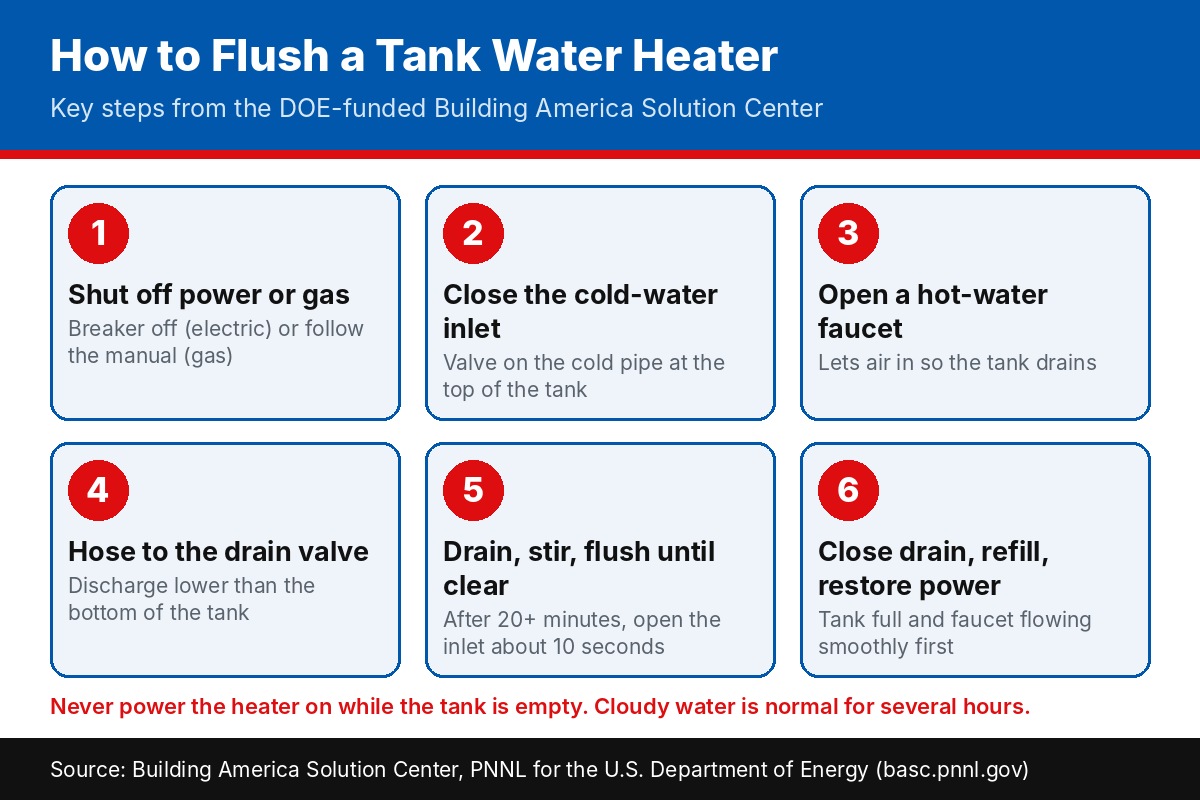
Drained water is hot, so wear gloves and let the tank cool first if you can. These steps follow guidance from the DOE-funded Building America Solution Center, and your owner’s manual always comes first.
- Turn off the water heater: Flip the breakers off for an electric unit. For a gas unit, follow the owner’s manual, which may call for the gas valve off or the pilot setting.
- Close the cold-water inlet valve: Shut the valve on the cold pipe at the top of the tank. If there is no valve, shut off water to the whole house.
- Open a hot-water faucet: Open a hot-only faucet, ideally one higher than the water heater, so air can replace the water that drains.
- Attach a hose to the drain valve: Connect a garden hose to the drain valve and run it to a floor drain or outside, ending lower than the bottom of the tank.
- Drain the tank and stir the sediment: Open the drain valve. After 20 minutes or more, open the cold-water inlet for about 10 seconds to stir what is left, and repeat as needed.
- Flush until the water runs clear: Close the hot faucet, then slowly open the inlet with the drain still open. Keep flushing until no chalky flakes or grit come out.
- Close the drain valve and refill: Close the drain valve and let the tank fill until the hot faucet flows smoothly without sputtering, then turn the faucet off.
- Restore power or gas: Turn the power or gas back on only after the tank is completely full. Wait several hours before doing laundry, since the water may be cloudy.
Flushing Safety Rules
- Never fire an empty tank: an electric element or gas burner that runs without a full tank can be destroyed quickly.
- Use a hot-water-rated hose: a standard hose can soften and kink under sustained hot flow.
- Do not force the drain valve: plastic valves crack and metal valves can seize after years of sitting.
- Watch the discharge: chalky flakes or sandy grit mean sediment is clearing, and a trickle that never changes may mean a clogged drain valve.
When a DIY Flush Will Not Work
A tank that has gone five or more years without a flush can hold scale packed into a solid mass. Water pressure alone rarely breaks it up, and loose chunks can lodge in the drain valve and leave it dripping. Call a professional if any of these apply:
- The water never runs clear, or only a trickle comes out of the drain valve.
- The drain valve will not open, or will not close fully afterward.
- The popping returns within a few weeks of flushing.
- The tank is roughly 10 years old or older.
- You see rust, moisture at the base, or discharge from the relief valve.
What a Professional Water Heater Visit Includes
Schneider Plumbing Heating & AC is a family-owned plumbing and HVAC company that has served homeowners since 1948, and our technicians do more than drain the tank. Whether you need a flush or want to diagnose, repair, or replace a tank water heater, every visit covers the same checks:
- Descaling and flushing: professional tools and descaling agents mobilize hardened scale without forcing debris through a small drain opening.
- Safety valve test: the T&P valve is checked to confirm it opens and reseats properly.
- Anode rod inspection: the sacrificial rod is checked for wear before the tank wall is exposed to corrosion.
- Heat source check: the thermostat, heating elements, or burner are tested for damage from overheating.
- Honest recommendation: you hear whether a repair makes sense or the tank is near the end, with no pressure either way.
“We called late in the day but they were at our home within half an hour and took care of the problem. The guys were polite and got everything done in a timely manner.”
Barbara Hayes, Schneider customer
Water Heater Popping Noise Repair Costs
Most popping noise repairs are inexpensive when caught early. These are typical national ranges for common fixes. The final price depends on tank size, access, and what the technician finds.
| Service | Typical Cost | When It Is Needed |
|---|---|---|
| Tank flush | $75 to $250 | Light to moderate sediment |
| Heating element replacement (electric) | $100 to $350 | Lower element burned out under scale |
| Thermostat replacement (electric) | $100 to $300 | Overheating or uneven heating |
| Anode rod replacement | $150 to $350 installed ($20 to $50 for the part) | Rod mostly consumed |
| T&P relief valve replacement | $100 to $200 | Valve stuck, dripping, or failed a test |
| Tank replacement (installed) | $850 to $1,800 | Leaking or rusted-through tank |
Repair or Replace a Popping Water Heater
Repair makes sense when the tank is under about 10 years old, shows no rust or leaks, and the problem is a flush, an element, a valve, or an anode rod. Replacement is usually the better value when the tank is past 10 years, the lining has failed, water is pooling at the base, or repair bills keep stacking up. A flush costs a fraction of a new tank, which is why catching the noise early matters.
How to Prevent Water Heater Sediment Buildup
Scale is easier to prevent than to remove. A few habits keep a tank quiet and efficient.
Annual Water Heater Maintenance Schedule
| Task | How Often | Why It Matters |
|---|---|---|
| Flush the tank | Once a year, or every 6 months with hard water | Removes loose sediment before it hardens into scale |
| Set the thermostat to 120°F | Once, then verify each year | Slows mineral buildup, cuts standby heat loss, and lowers scald risk |
| Test the T&P relief valve | Once a year | Confirms the safety valve moves freely |
| Inspect the anode rod | Every 1 to 3 years | Replacing a worn rod protects the tank wall from rust |
| Professional inspection | Once a year | Catches element, valve, and tank problems early |
Treat Hard Water at the Source
Removing calcium and magnesium before the water reaches your tank removes the source of the scale. A whole-home water softener protects the water heater, fixtures, and every appliance downstream.
Put Maintenance on a Schedule
Flushes and inspections are easy to forget until the tank starts popping. The Schneider Advantage Plan covers routine inspections and priority scheduling, so the tank gets checked every year without you having to remember.
Water Heater Popping Noise FAQs
Is it safe to keep using a water heater that is popping?
Will flushing the tank stop the popping?
Why does my water heater pop only when it is heating?
How often should I flush my water heater?
How much does it cost to flush a water heater?
Can a water softener stop water heater sediment?
What temperature should I set my water heater to?
Can a popping water heater explode?
Get Your Water Heater Checked Before the Noise Gets Worse
A popping water heater is telling you something, and the cheapest time to listen is when the fix is still a flush instead of a new tank. Contact the Schneider team to schedule a water heater inspection, and we will tell you straight what your tank needs.