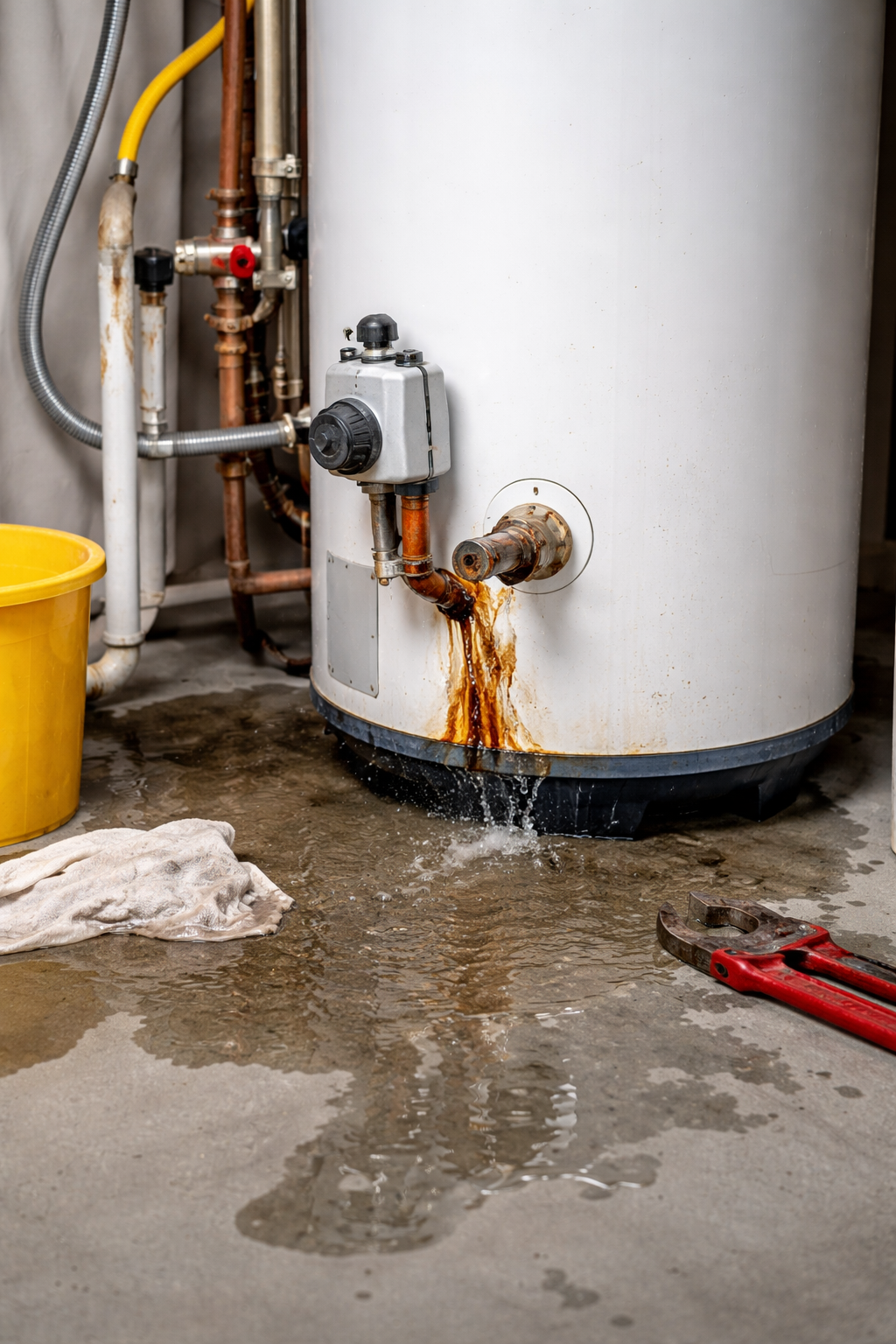
A water heater leaking from the bottom is one of the most concerning plumbing issues a homeowner can face. While some leaks may seem minor at first, water pooling around the base of your unit often signals a deeper problem that can quickly escalate into costly damage. From internal tank corrosion to failing components, bottom leaks should never be ignored. Understanding the causes and knowing what steps to take immediately can help you protect your home, avoid water damage, and restore your hot water supply as quickly as possible.
Why a Water Heater Leaking from the Bottom Is Serious
When a water heater begins leaking from the bottom, it is rarely a superficial issue. Unlike leaks from fittings or connections, bottom leaks often originate from inside the tank itself or from critical safety components. This makes them particularly serious for several reasons:
- Potential tank failure: A leak at the base may indicate that the internal tank lining has corroded and failed.
- Rapid water damage: Water can quickly spread across floors, seep into subflooring, and damage nearby walls or belongings.
- Mold and mildew growth: Persistent moisture creates the perfect environment for mold, which can affect indoor air quality.
- Reduced efficiency or total failure: A leaking unit will struggle to maintain proper operation and may stop producing hot water altogether.
- Safety concerns: In gas water heaters, leaks can impact burner performance. In electric units, water exposure can create electrical hazards.
Because of these risks, any signs of water collecting beneath your water heater should be treated as urgent.
Common Causes of Bottom Water Heater Leaks
There are several reasons why water might appear at the base of your unit. Identifying the root cause can help determine whether a repair is possible or if replacement is necessary.
Water heater leaking from the bottom due to tank failure
One of the most common and serious causes of a bottom leak is internal tank failure. Over time, the inside of a water heater tank is exposed to minerals, sediment, and constant heating and cooling cycles. Even with protective linings, corrosion can develop.
Key factors that contribute to tank failure include:
- Age of the unit: Most water heaters last between 8 to 12 years. Older units are more prone to corrosion.
- Sediment buildup: Minerals in hard water settle at the bottom of the tank, creating a layer that traps heat and accelerates wear.
- Anode rod depletion: The anode rod is designed to attract corrosive elements. Once it wears out, the tank itself becomes vulnerable.
When the tank fails, water escapes from the bottom and cannot be repaired. In these cases, replacement is typically the only solution.
Pressure relief valve and internal corrosion issues
Another potential cause of water pooling near the base is related to the temperature and pressure relief valve or internal corrosion affecting fittings and seals.
The pressure relief valve is a critical safety feature that releases excess pressure inside the tank. If it malfunctions or if pressure builds too high, water may be discharged and travel down to the base of the unit.
Other related issues include:
- Loose or worn drain valves: The drain valve at the bottom of the tank may loosen or degrade over time.
- Corroded fittings: Connections inside the unit may deteriorate and allow water to escape.
- Excessive pressure buildup: This can force water out of valves and seals, leading to visible pooling.
While some of these issues can be repaired, they still require prompt attention to prevent further damage.
Preventing water damage from sudden leaks
Even a small leak can quickly become a major problem if left unchecked. Taking immediate steps when you notice water at the base of your heater can significantly reduce the risk of damage.
Here is what homeowners should do right away:
- Turn off the power or gas supply: This helps prevent safety hazards and further damage.
- Shut off the water supply: Locate the cold water shutoff valve above the heater and turn it off.
- Drain the tank if necessary: This can help reduce pressure and minimize leakage.
- Remove standing water: Use towels or a wet vacuum to clean up water and prevent it from spreading.
- Move nearby items: Protect belongings from water exposure.
Taking these steps buys you time while you arrange for professional service.
When to Call a Professional for Water Heater Repairs
While some minor issues like a loose valve may seem manageable, most bottom leaks require expert evaluation. Calling a professional plumber is the safest and most effective way to address the problem.
You should contact a professional immediately if:
- The leak is coming directly from the tank
- Water is pooling rapidly or spreading
- The unit is more than 8 years old
- You notice rust, corrosion, or discoloration
- There is a lack of hot water or inconsistent performance
- You are unsure of the source of the leak
A licensed technician can:
- Perform a thorough inspection of the unit
- Identify whether repair or replacement is needed
- Safely handle gas or electrical components
- Ensure the system meets safety standards
- Recommend energy efficient upgrade options if necessary
Attempting to repair a failing tank on your own can lead to further damage or safety risks. Professional service ensures the issue is handled correctly the first time.
FAQs
Is a water heater leaking from the bottom always a sign of failure?
Not always, but it is often a serious indicator. While some leaks may come from valves or fittings, many bottom leaks are caused by internal tank damage.
Can I still use my water heater if it is leaking?
It is not recommended. Continuing to use a leaking unit can worsen the problem and increase the risk of water damage or safety hazards.
How long does it take to replace a water heater?
In most cases, a professional can replace a water heater within a few hours, depending on the complexity of the installation.
What is the average lifespan of a water heater?
Traditional tank water heaters typically last 8 to 12 years. Proper maintenance can extend their lifespan.
How can I prevent my water heater from leaking?
Regular maintenance is key. This includes flushing the tank annually, checking the anode rod, and inspecting valves and connections.
Does homeowners insurance cover water heater leaks?
Coverage depends on your policy and the cause of the leak. Sudden and accidental damage is often covered, while neglect or wear and tear may not be.
Protect Your Home with Expert Help from Schneider Plumbing, Heating & Air Conditioning
A water heater leaking from the bottom is not something to ignore. Acting quickly can prevent extensive damage and restore comfort to your home. Whether you need a repair, replacement, or routine maintenance, having a trusted professional on your side makes all the difference.
For over 70 years, Schneider Plumbing, Heating & Air Conditioning has proudly served homeowners throughout Jackson and Jennings County. As a family-owned company, our team is dedicated to delivering dependable plumbing, heating, and cooling services that improve everyday comfort. With a strong commitment to quality workmanship and customer care, Schneider is the name homeowners trust when they need expert service.
If you are dealing with a leaking water heater or want to ensure your system is in top condition, do not wait. Contact our team to schedule service. Experience the peace of mind that comes from working with professionals who put your home and comfort first.
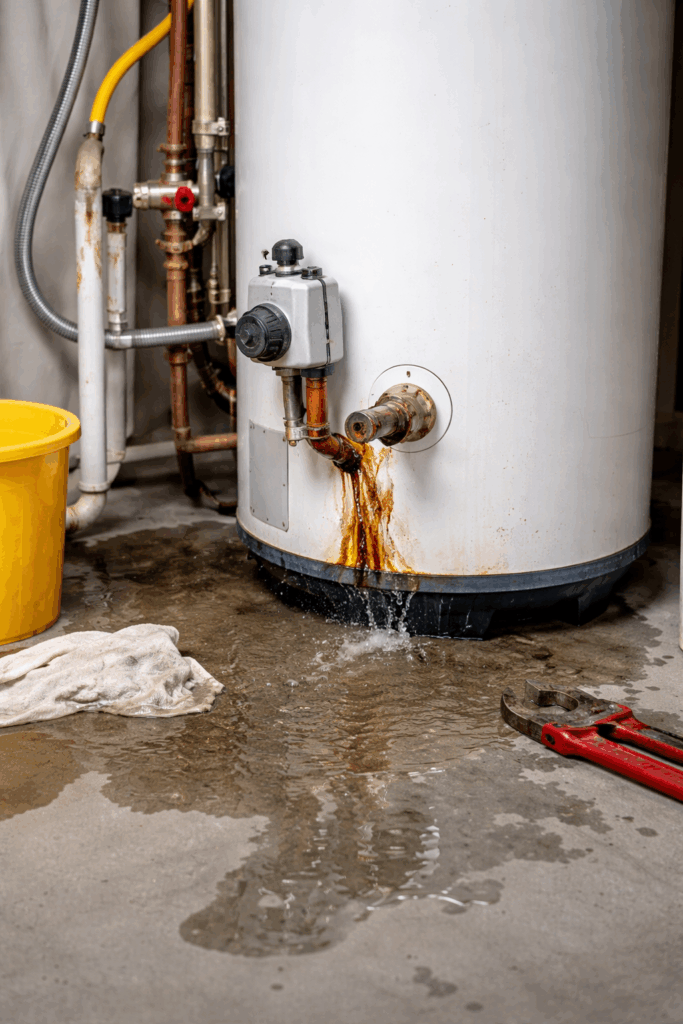
A leaking water heater is more than just an inconvenience. It can lead to water damage, higher utility bills, mold growth, and in severe cases, complete system failure. Understanding leaking water heater causes is the first step in protecting your home and knowing when a simple repair will solve the problem or when it is time to replace the unit altogether. Water heaters are built to be durable, but constant exposure to heat, pressure, and minerals in the water supply means wear and tear is inevitable over time. By recognizing the warning signs early and responding appropriately, homeowners can avoid costly emergencies and extend the life of their system.
Why Water Heaters Leak in the First Place
Water heaters operate under conditions that naturally stress their components. Inside the tank, water is constantly heated and reheated, causing metal parts to expand and contract. Over years of use, this process weakens seals, fittings, and the tank itself. Add in mineral-rich water, fluctuating water pressure, and regular daily use, and it becomes clear why leaks are a common issue.
Another key reason water heaters leak is age. Most traditional tank-style water heaters last between eight and twelve years. As the unit approaches or exceeds this range, the risk of leaks increases significantly. Internal parts may corrode, valves may fail, and the protective lining inside the tank can break down. While regular maintenance helps slow these processes, it cannot stop them entirely.
Improper installation can also play a role. If connections are not tightened correctly or if the unit is not installed to code, leaks may develop much sooner than expected. In some cases, leaks that appear to be coming from the tank are actually the result of nearby plumbing components failing, which is why professional inspection is so important.
Common Leaking Water Heater Causes
Several specific issues commonly lead to water heater leaks. Some are relatively minor and easy to fix, while others signal a more serious problem.
One of the most frequent causes is corrosion inside the tank. Water naturally contains minerals, and over time, these minerals settle at the bottom of the tank. This sediment can damage the tank lining, allowing rust to form. Once corrosion eats through the metal, the tank will begin to leak, and replacement is usually the only option.
Loose or damaged plumbing connections are another common culprit. The cold water inlet and hot water outlet pipes are connected to the top of the tank using fittings that can loosen over time due to vibration and thermal expansion. Even a small gap can allow water to escape.
Faulty valves are also a frequent source of leaks. Water heaters rely on several valves to operate safely, including the temperature and pressure relief valve and the drain valve. If these components fail, water can leak from the bottom or side of the unit.
Other common leaking water heater causes include:
- A cracked tank caused by thermal stress or freezing temperatures
- Excessive water pressure that strains internal components
- A worn-out anode rod that no longer protects the tank from corrosion
- Improper maintenance leading to sediment buildup
Understanding which of these issues is affecting your water heater is essential for determining the right solution.
Checking Connections and Drain Valves
When a leak is discovered, one of the first areas to inspect is the connections and valves. Leaks from the top of the water heater often point to loose or damaged fittings. In many cases, tightening the connections or replacing a worn washer can stop the leak. However, overtightening can cause further damage, so care is required.
The drain valve located near the bottom of the tank is another frequent trouble spot. This valve is used during maintenance to flush sediment from the tank, but over time, it can wear out or become clogged with debris. A faulty drain valve may drip continuously or leak when the tank is under pressure. Replacing the valve is typically straightforward and relatively inexpensive when compared to replacing the entire unit.
It is important to turn off the power or gas supply and the water supply before attempting any inspection or repair. Water heaters combine electricity or gas with water, which can be dangerous without proper precautions. If there is any uncertainty, contacting a licensed plumber is the safest course of action.
The Role of Sediment and Rust Buildup
Sediment buildup plays a major role in many water heater problems, including leaks. As minerals settle at the bottom of the tank, they form a thick layer that insulates the water from the heating element or burner. This forces the system to work harder to heat the water, increasing energy usage and accelerating wear.
Over time, sediment can cause hot spots within the tank, leading to cracks or weakened metal. Rust develops when the anode rod, a sacrificial component designed to corrode instead of the tank, is depleted. Once the anode rod is no longer effective, corrosion attacks the tank itself.
Regular maintenance, such as flushing the tank and inspecting the anode rod, can significantly reduce the risk of sediment-related leaks. Homeowners who skip maintenance often face premature failure, even if the water heater is relatively young.
Repair vs Replacement: What’s the Best Fix?
Deciding whether to repair or replace a leaking water heater depends on several factors, including the age of the unit, the source of the leak, and the overall condition of the system. Some leaks are minor and can be resolved quickly, while others indicate that the water heater is nearing the end of its lifespan.
Repairs make sense when the leak originates from a replaceable component, such as a valve or fitting, and the tank itself is in good condition. In these cases, a professional repair can restore normal operation and extend the life of the unit for several more years.
Replacement becomes the better option when the tank is leaking due to corrosion or structural damage. Once the tank itself fails, repairs are not effective or safe. Continuing to operate a leaking tank can result in flooding or water damage to surrounding areas.
Factors to consider when choosing between repair and replacement include:
- The age of the water heater
- The cost of the repair compared to replacement
- Energy efficiency of the existing unit
- Frequency of past repairs
- Household hot water demands
A professional plumber can evaluate these factors and provide guidance tailored to your specific situation.
When Replacement Is More Cost-Effective
There are times when replacing a water heater is the most practical and economical choice. If the unit is more than ten years old and experiencing leaks, replacement is often recommended. Older units are less energy efficient and more prone to additional failures, which can lead to repeated repair costs.
Modern water heaters offer improved efficiency, better temperature control, and advanced safety features. Upgrading to a newer model can reduce energy bills and provide more consistent hot water. In some cases, switching to a tankless system may be an option, depending on household needs and plumbing configuration.
Replacement is also more cost-effective when a major component fails. For example, if corrosion has compromised the tank or if multiple components need replacement, the combined cost of repairs may approach or exceed the price of a new unit. Investing in a new water heater provides peace of mind and often comes with a manufacturer’s warranty.
Safety is another important consideration. A leaking water heater can create electrical hazards, damage floors and walls, and promote mold growth. Replacing an unreliable unit reduces these risks and helps protect your home.
Preventing Future Water Heater Leaks
While not all leaks can be prevented, regular maintenance goes a long way toward reducing risk. Annual inspections by a qualified plumber can identify early signs of wear and address small issues before they become major problems. Simple steps like flushing the tank, checking the anode rod, and testing the pressure relief valve help maintain system health.
Homeowners should also pay attention to warning signs such as discolored water, unusual noises, or fluctuating water temperatures. These symptoms often appear before a leak develops and should prompt a professional evaluation.
Installing a drip pan and leak detection device can provide additional protection, especially in finished spaces or areas where water damage would be costly. These measures do not prevent leaks but can minimize damage and alert homeowners quickly.
Call a Trusted Local Expert
If you are dealing with a leaking water heater or want to prevent future problems, professional help makes all the difference. Schneider Plumbing, Heating & Air Conditioning has proudly served Jackson and Jennings County for over 70 years, helping families stay comfortable and safe in their homes. As a family-owned HVAC and plumbing company, we are committed to delivering reliable service, honest recommendations, and quality workmanship every time. Whether you need a minor repair, routine maintenance, or a full water heater replacement, our experienced team is ready to help. Contact us to schedule service and experience the highest level of care from trusted local experts.