



Common Plumbing Issues in Older Homes and How to Fix Them
Older homes offer character, craftsmanship, and history that new construction rarely matches, but the plumbing hidden in the walls often tells a different story. Knowing the most common plumbing issues in older homes helps you spot trouble early, plan repairs on your terms, and avoid the water damage that tends to follow when aging pipes finally give out.
The challenge is that decades-old plumbing fails in specific, predictable ways, depending on the materials your home was built with. At Schneider Plumbing, Heating & Air Conditioning, we work on older homes every week, so here is what we see most often, what it means for your home, and how to fix it.
Common Plumbing Issues in Older Homes
Homes with decades of history are far more common than most people realize. According to federal survey data from the U.S. Energy Information Administration, about 52% of U.S. homes were built before 1980, and roughly 37% were built before 1970. That means a large share of American households are living with plumbing that was designed for a very different era.

Source: U.S. Energy Information Administration, 2020 Residential Energy Consumption Survey. Percentages calculated from EIA home counts.
Plumbing Issues in Older Homes by Pipe Material and Age
The materials in your walls determine which problems you are most likely to face. The eras below are approximate, since builders and regions varied, but they give you a useful starting point.
| Material | Typical Era | Common Problem |
|---|---|---|
| Lead pipe and solder | Before the 1986 federal ban | Lead can leach into drinking water |
| Galvanized steel supply pipe | Early to mid 1900s, into the 1960s | Internal rust, buildup, low pressure |
| Cast iron drain pipe | Early 1900s through the 1970s | Rust, cracking, slow drains |
| Clay and Orangeburg sewer pipe | Early 1900s through the 1970s | Root intrusion, collapse, offset joints |
| Polybutylene supply pipe | Late 1970s to mid 1990s | Brittleness and sudden leaks |
Corroded and Leaking Pipes
Corrosion is the most widespread issue in aging plumbing. Metal pipes slowly rust or scale from the inside, which thins the walls until a pinhole leak forms. Because many of those pipes sit behind drywall or under floors, a small leak can run for months before anyone notices.
Watch for these warning signs:
- Discolored water: brown, yellow, or reddish water often means rust is breaking loose inside the pipe.
- Stains on walls or ceilings: water marks and bubbling paint point to a leak behind the surface.
- Green or white crust on exposed pipes: corrosion at joints and fittings is a sign the metal is deteriorating.
- Musty odors: persistent dampness can signal a slow hidden leak.
- Rising water bills: a bill that climbs with no change in habits often points to a leak somewhere in the system.
When the source is hidden, professional leak detection locates the problem without tearing open walls, using acoustic equipment, pressure testing, and thermal imaging. Knowing the exact location also keeps repair costs down, because only the damaged section has to be opened up.
Once the leak is found, the next question is how much of the pipe is affected. Isolated damage in otherwise healthy pipe can often be fixed with targeted pipe repair, while widespread corrosion or repeated leaks usually mean it is time to replace the pipe instead of patching it again.
Low Water Pressure in Older Homes
Weak pressure is another frequent complaint, and in older homes it usually has one of four causes:
- Corroded or clogged pipes: rust and mineral scale narrow the inside of galvanized steel pipe, so less water gets through.
- A failing pressure regulator: the valve that controls incoming pressure wears out over time.
- Hidden leaks: water escaping before it reaches your fixtures lowers pressure at the tap.
- Undersized or outdated piping: older layouts were not designed for today’s fixtures and water demand.
Most homes are designed to run at roughly 40 to 80 PSI, and a simple gauge on an outdoor spigot can show whether your pressure is in range. If pressure is low in every fixture, the issue is likely at the main line or regulator. If it is low at only one or two fixtures, the cause is usually local buildup or a failing valve or cartridge. Fixes range from replacing a regulator to cleaning or replacing the affected piping.
Slow Drains and Aging Sewer Lines
Drain pipes age just like supply pipes. Cast iron rusts and develops rough interior surfaces where grease and debris collect, clay pipe cracks and shifts at the joints, and Orangeburg pipe, which is made of bonded tar paper, can deform or collapse. Tree roots exploit any weakness, working their way in through joints and cracks.
Several slow drains at once, gurgling sounds, or sewage odors usually mean a problem in the main line rather than a single fixture. Regular professional drain cleaning clears buildup, and a camera inspection shows whether the pipe underneath is sound.
If the camera shows that roots, cracks, or a collapse have damaged the line, cleaning alone will not hold. At that point, sewer line repair restores the pipe before a backup inside the house forces the issue.
Old Fixtures, Valves, and Shutoffs
Smaller components fail too. Shutoff valves under sinks and toilets can seize or leak when you finally try to use them, old supply lines can burst, and original faucets and toilets often waste water or leak at worn seals. These parts are inexpensive to replace, and swapping them proactively is one of the easiest ways to prevent a flood.
Plumbing Problems in Old Homes: Lead, Galvanized Steel, and Polybutylene
Some plumbing problems in old homes go beyond leaks and low pressure. Three materials in particular deserve attention because they affect safety, water quality, and long-term reliability.
Lead Pipes, Fixtures, and Solder
The EPA states that homes built before 1986 are more likely to have lead pipes, fixtures, and solder. Lead can enter drinking water when those materials corrode, and the EPA estimates that drinking water can make up 20 percent or more of a person’s total lead exposure.
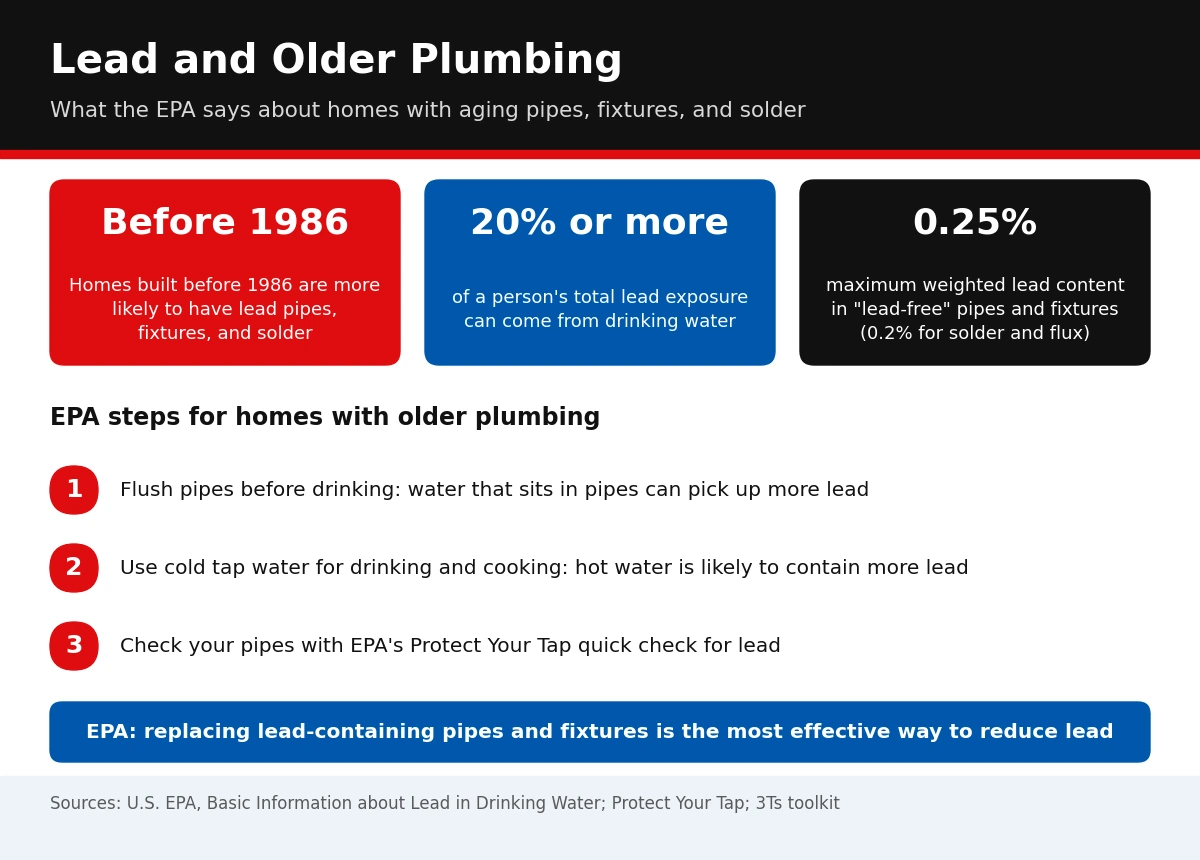
Sources: U.S. EPA, Basic Information about Lead in Drinking Water and EPA’s Protect Your Tap quick check
If your home predates 1986, it is worth finding out what your pipes are made of. Lead pipe is soft, dull gray, and shows a shiny silver surface when scratched lightly, and a magnet will not stick to it. A licensed plumber can confirm the material and test or recommend next steps. Until you know, the EPA advises flushing your pipes before drinking and using cold water for drinking and cooking, since hot water is likely to contain higher levels of lead. Many older homes are also connected to the street by an aging main line, so it helps to have your water line repair options in mind if that line turns out to be old or corroded.
Galvanized Steel Pipe
Galvanized steel was a standard supply pipe for decades. The zinc coating protects it for a while, but it eventually wears away and the steel rusts from the inside out. The results are rusty water, shrinking flow, and leaks at threaded joints. A home with galvanized pipe that has low pressure and discolored water is usually near the end of the pipe’s service life.
Polybutylene Pipe
Polybutylene is a gray, blue, or black plastic pipe that was widely installed from the late 1970s through the mid 1990s. It became known for becoming brittle and failing at fittings, sometimes without warning. If your home was built or renovated in that window and has this pipe, replacement is generally recommended, and it can also affect insurance and resale.
How to Fix Old House Plumbing Issues
Repair or Replace?
The right answer depends on how widespread the problem is. Use this as a general guide:
| Situation | Usually Best Approach |
|---|---|
| One isolated leak in otherwise healthy pipe | Targeted repair |
| Repeated leaks in the same area or on the same line | Replace that section |
| Rusty water and low pressure throughout the house | Whole-home re-piping |
| Lead or polybutylene pipe confirmed | Replacement of affected pipe |
| Damaged underground water or sewer line | Trenchless or open-cut replacement |
Re-Piping Options for Older Homes
When pipes are failing throughout the house, piecemeal repairs add up quickly and rarely solve the underlying problem. Full home re-piping replaces aging supply lines with modern materials such as PEX or copper, which resist corrosion and restore steady flow. Many homeowners choose a phased approach, replacing the highest-risk sections first, such as exposed basement runs or lines that have already leaked, then continuing as budget allows.
Epoxy pipe lining is another option some contractors offer, where a coating is applied inside the existing pipe. It works best on pipe that is structurally sound, and it is not right for every situation, so ask whether a lining product is approved for drinking water before agreeing to it.
Trenchless Repair for Underground Lines
Underground water and sewer lines in older homes often run beneath driveways, landscaping, and mature trees. Trenchless methods replace the line through small access points instead of a long trench, which can save a yard from being torn up. A camera inspection tells your plumber whether the line is a candidate or whether it needs conventional excavation.
Preventing Water Damage in Older Homes
Know Where Your Main Shutoff Is
Every household member should know where the main water shutoff is and how to operate it. In an older home the valve can be stiff or corroded, so test it once a year and have it replaced if it will not close fully. In a burst-pipe emergency, those few seconds matter.
Inspect and Maintain on a Schedule
- Check under sinks and around toilets for moisture, corrosion, and soft cabinet floors.
- Look at exposed pipes in basements, crawl spaces, and utility rooms for rust, crust, or drips.
- Watch your water meter: if it keeps moving when every fixture is off, you may have a leak.
- Schedule a professional inspection every year or two, or right away after buying an older home.
Why Fast Repairs Matter
Leaks rarely stay small. Moisture inside walls and floors feeds mold, which can begin to grow within a day or two on damp materials, and it softens framing and drywall. Fixing a leak early costs a fraction of repairing the damage it causes later, and it protects the air quality and structure of the house.
Why Older Plumbing Calls for an Experienced Professional
Accurate Diagnosis Without Guesswork
Older systems often hide their problems. Video pipe inspections, pressure testing, and leak detection equipment let a professional see what is happening inside the pipe instead of guessing, which keeps repairs targeted and avoids unnecessary demolition.
Code Compliance
Existing plumbing in an older home is often allowed to stay as it is, but new work generally has to meet current code. That can affect pipe sizing, venting, shutoff valves, and fixtures, and it is one more reason to hire someone who knows what is required. Permits and inspections protect you when you sell or insure the home.
Long-Term Value
DIY fixes on aging systems can create new leaks, break brittle fittings, or turn a small job into a large one. An experienced licensed plumbing contractor will diagnose the real problem, recommend the right materials, and give you a clear scope and price, so you spend money once instead of repeatedly.
Plumbing Issues in Older Homes FAQs
What are the most common plumbing issues in older homes?
How do I know if my old house has lead pipes?
Should I replace galvanized pipes in an older home?
Is polybutylene pipe a problem?
Why is the water pressure low in my old house?
How do I tell if I have a hidden leak?
How often should plumbing be inspected in an older home?
Protect Your Older Home With a Plumbing Plan
Older plumbing does not have to be a source of constant worry. Once you know which materials are in your walls and which warning signs to watch for, you can fix problems early, replace the highest-risk pipes on your own schedule, and keep your home safe and dry for years to come.
Schneider has been family-owned since 1948, and we treat every older home with the care it deserves. If you are seeing leaks, low pressure, or rusty water, or you simply want to know what you are dealing with, schedule a plumbing inspection with our team and we will walk you through your options.