


Why Does My Furnace Smell Like It Is Burning?
A furnace burning smell during the first cold snap of the year is almost always harmless. When a furnace fires up for the first time after sitting idle all summer, it burns off the dust and debris that settled on the heating element, and that smell travels straight through the vents. It is unpleasant, but it is not dangerous. The problem is that two or three other furnace odors look identical on the surface and are genuinely hazardous. Knowing the difference is not complicated once you understand what each smell represents.
What Causes a Furnace Burning Smell?
The most common cause, by a wide margin, is seasonal dust burning off the heat exchanger, the metal chamber that heats the air moving through the home. Think about what happens to a lamp that has not been switched on in months: a thin film of dust coats the bulb, and the moment the switch flips, that dust scorches and fills the room with a faint, acrid smell. A furnace works the same way. During the off-season, household dust, pet dander, and pollen settle directly onto the heat exchanger. When the furnace runs its first cycle of the season, that layer burns off and the smell moves through every duct in the house. It clears on its own, usually within 20 to 30 minutes of continuous operation.
How Long a Furnace Burning Smell Should Last
A genuine dust burn-off smell should clear within 20 to 30 minutes of continuous operation. Opening a window or two speeds that along by giving the odor somewhere to go. If the smell is still present after the furnace has completed two or three full heating cycles, it has moved past the category of normal startup behavior and is worth a closer look.
A clogged air filter creates a different but related problem. When the filter is packed with debris, airflow through the furnace drops sharply. The blower motor, the fan that pushes warm air through the home, strains to push air through the restriction, and the internal chamber heats beyond its normal operating range. The result is a hot, dusty, faintly metallic odor that does not smell quite like clean dust burn-off. A filter change is often the first and only fix needed, and it takes less than five minutes.
Burning plastic or a sharp chemical odor is a different category entirely. The blower motor sits inside a plastic housing, and when that motor runs too hot, whether from age, a failing bearing, or restricted airflow, the housing can begin to warp and melt. It is similar to leaving a plastic container too close to a hot stove burner: the material does not burst into flames immediately, but it softens, deforms, and releases a harsh chemical smell that no amount of ventilation will clear on its own. That odor means something is actively breaking down inside the furnace.
Oil-fired furnaces introduce one more variable. A clogged burner nozzle or a delayed ignition issue can produce a heavy, sooty oil smell that lingers well past startup. More critically, any fuel-burning appliance, gas, propane, or oil, can produce carbon monoxide when combustion is incomplete. Carbon monoxide has no smell, no color, and no taste, which is exactly why understanding the other odors a furnace produces matters so much.
When a Furnace Smell Signals Danger
Dust burn-off smells dry and organic, like something old being heated rather than something synthetic melting. It fades. Dangerous odors do not fade. They either hold steady or intensify as the furnace continues to run. That persistence is the most reliable field test available.
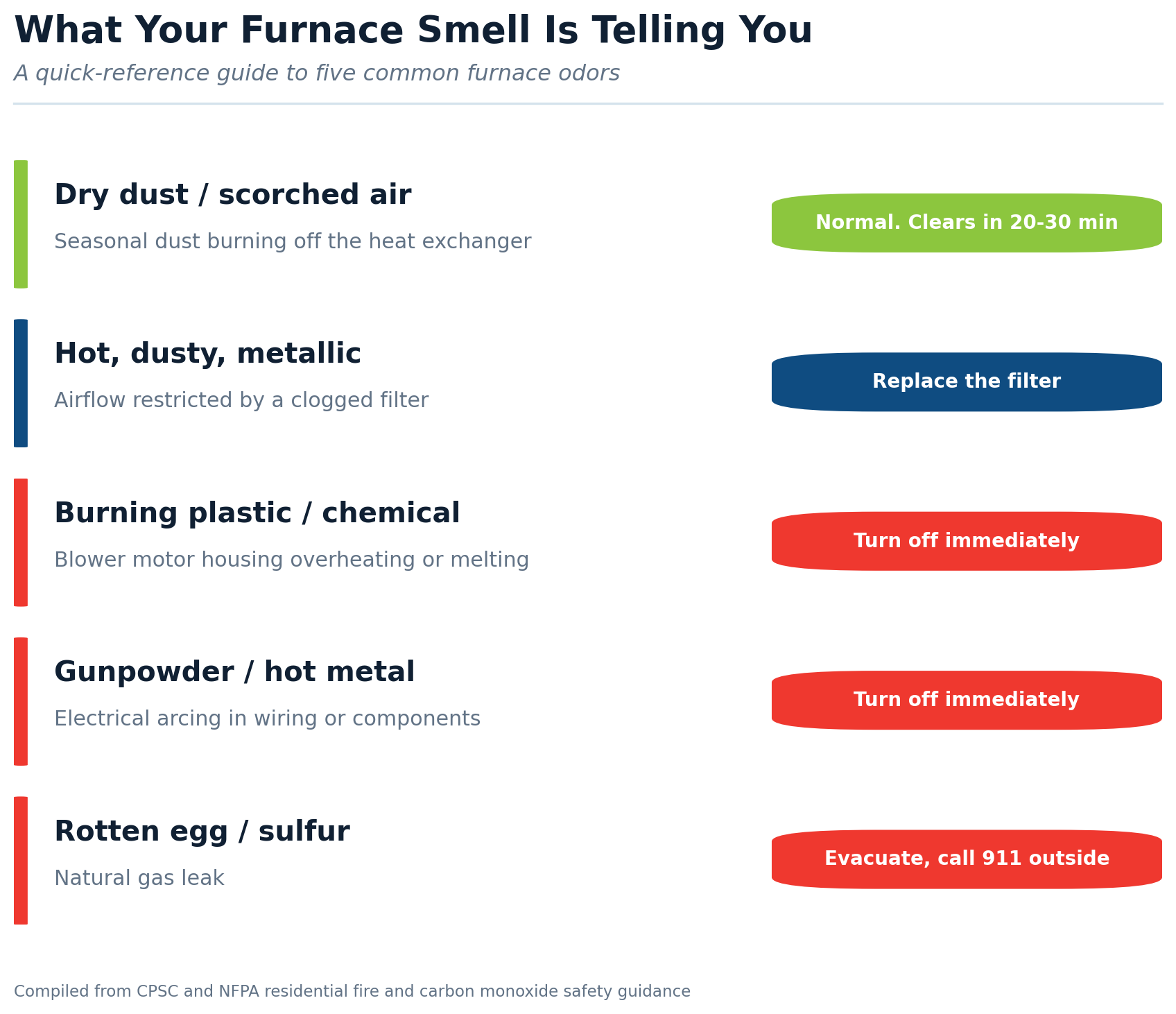
A quick reference for what each smell signals:
- Dry dust or scorched air: Normal seasonal burn-off, clears within 30 minutes, no action required beyond ventilating the space
- Burning plastic or acrid chemical odor: Melting blower motor housing or wire insulation, does not clear, turn the furnace off immediately
- Gunpowder, hot metal, or ozone: Electrical arcing from shorted or damaged wiring, turn the furnace off immediately and do not restart it
- Rotten egg or sulfur: Natural gas leak, do not touch any switches, evacuate the house and call 911 from outside
- Heavy oil or sooty fuel smell: Clogged burner nozzle or delayed ignition on an oil-fired system, worth getting checked out before running the furnace further
The Real Risk Behind These Odors: Fire and Carbon Monoxide
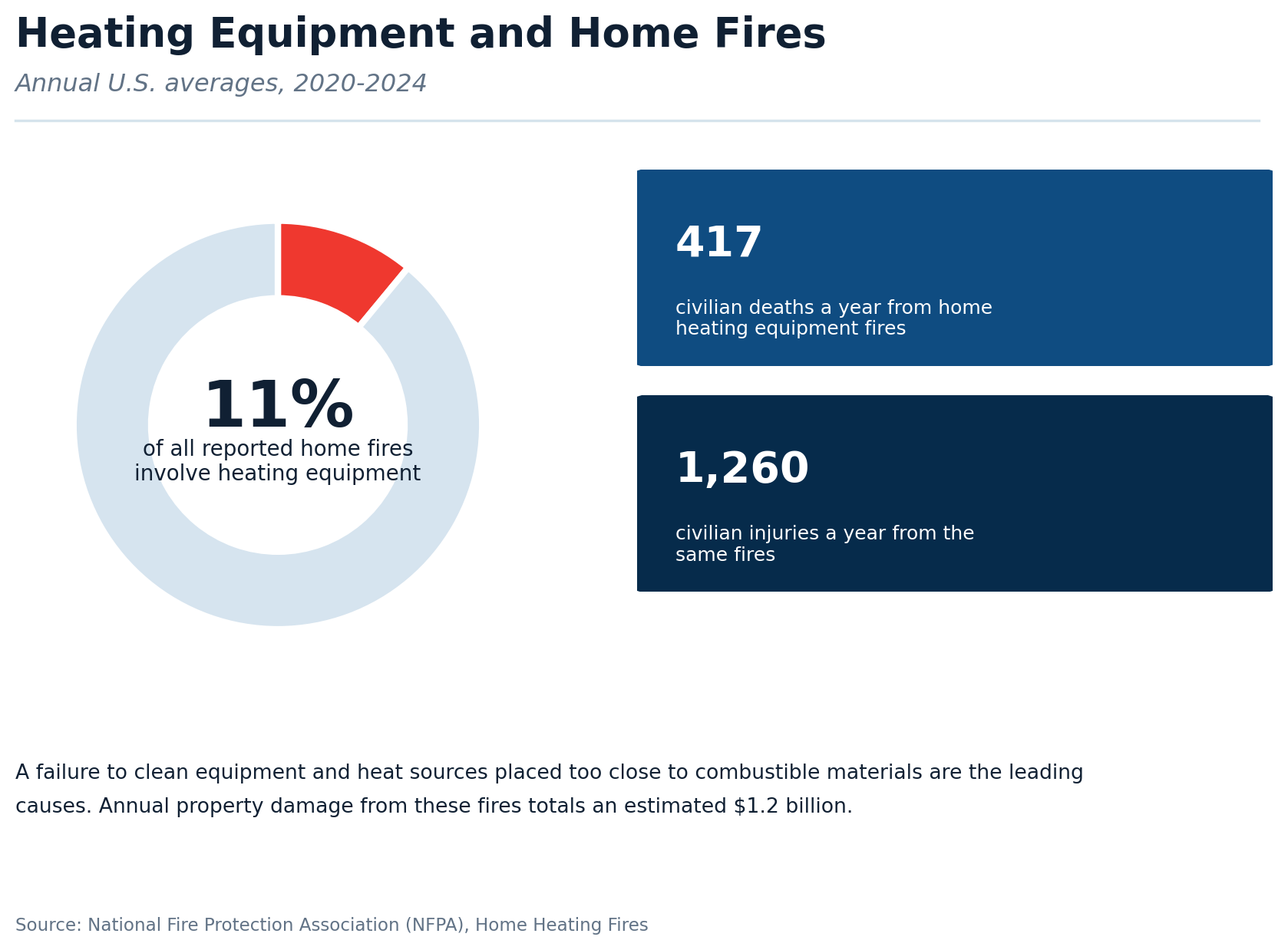
Heating equipment is a leading cause of home fires, and the numbers make a strong case for taking a persistent burning smell seriously rather than waiting it out.
According to the National Fire Protection Association, heating equipment accounts for an estimated 11 percent of all reported home fires each year, resulting in an average of 417 civilian deaths, 1,260 injuries, and $1.2 billion in property damage annually. A failure to clean equipment, exactly the kind of buildup that produces that seasonal dust smell if it is never addressed, is among the leading causes.
Carbon monoxide is the second and more insidious risk. A cracked heat exchanger is like a crack in a car’s engine block. It means the system is not working safely and needs attention right away. A crack in the component that heats a home’s air allows combustion gases, including carbon monoxide, to mix with the air circulating through the house. Because CO is colorless and odorless, it cannot be detected by smell under any circumstances.
According to the Consumer Product Safety Commission, more than 200 people in the United States die every year from carbon monoxide produced by non-automotive consumer products, including malfunctioning furnaces, and several thousand more are treated in emergency rooms for CO poisoning annually.
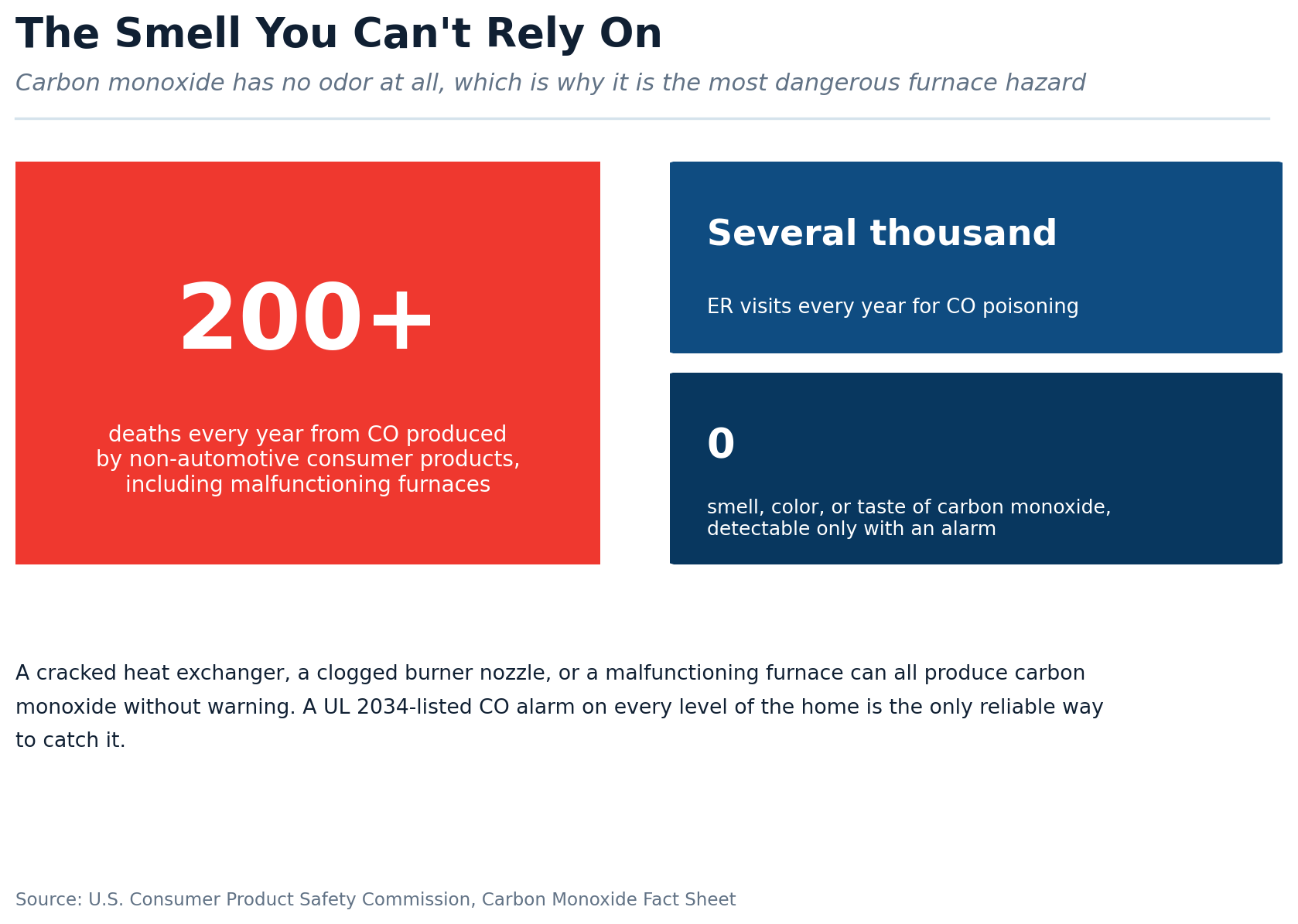
The only reliable protection is a UL 2034-compliant carbon monoxide alarm installed on every level of a home and outside sleeping areas. If a CO alarm sounds, treat it as an emergency: move everyone outside immediately and call 911.
Electrical, Motor, and Belt Problems That Create Burning Odors
When the smell is not dust, the source is almost always somewhere in the furnace’s mechanical or electrical components, and these problems do not resolve on their own.
An overheating blower motor is one of the more common culprits. The blower motor is essentially the fan that pushes warm air through the home, and when it fails, the heat cannot reach the rooms it is meant to serve. When its bearings wear down or lose lubrication, the motor runs hot, and friction creates intense heat. The smell it produces is metallic and oily, closer to a burning machine than burning dust. Left unaddressed, an overheating motor will eventually seize completely, leaving the house cold and adding a motor replacement to the repair bill.
Older furnace models use a rubber belt to connect the motor shaft to the blower fan. That belt can slip, crack, or friction-heat as it ages, and the smell it produces is unmistakably burning rubber, distinct from both dust and electrical odors. Replacing a worn belt is a simple, low-cost repair. The risk is letting it go until the belt snaps and the blower stops moving air entirely.
Damaged or loose electrical wiring produces a sharp, pungent smell that most people describe as gunpowder or hot metal. Electrical arcing, where current jumps across a gap in damaged insulation, generates intense localized heat, and that heat is what produces the smell. It can trip a circuit breaker, and if the arc finds combustible material nearby, it becomes a fire hazard quickly.
Signs the Heating System Should Be Turned Off Immediately
Turn a furnace off at the thermostat, and then at the circuit breaker, if any of the following are present:
- A chemical or plastic odor that does not fade within 30 minutes of startup
- A gunpowder or hot-metal smell, which signals electrical arcing in the wiring or components
- A rotten egg or sulfur smell, which is a natural gas odorant. Leave the house without touching any light switches or electrical devices, then call 911 from outside
- A circuit breaker that trips every time the furnace cycles on
- Visible scorch marks or discoloration around the furnace cabinet or electrical panel
- A burner flame that burns yellow or orange instead of a steady blue
Any of these, combined with a burning odor, means the furnace should stay off until a technician has inspected it. A malfunctioning appliance identified as a carbon monoxide source should not be operated again until it has been properly serviced by trained personnel.
What to Check Before Calling for Furnace Repair
Before calling a technician, a few basic checks can rule out the simplest causes and give a technician useful information if a service call does turn out to be necessary.
Start with the air filter. Pull it out and hold it up to the light. If it is gray, matted, or covered in pet hair, it is blocking airflow enough to cause the furnace to overheat and smell like it is burning. Replace it with a clean filter before running the furnace again. This single step resolves a surprising number of burning odor complaints and costs a few dollars.
Next, walk around the sides of the furnace itself. Cardboard boxes, plastic storage bins, cleaning chemicals, and anything else stored within three feet of the unit can heat up and begin to off-gas when the furnace runs. Clear that space completely. Furnaces generate significant heat, and the three-foot clearance rule exists for good reason.
Then walk through the house and check every supply vent and return grille. Furniture pushed against a register, a rug laid over a floor vent, or drapes hanging over a wall grille all restrict airflow in ways that force the furnace to work harder and run hotter than it should. Unblocking vents takes two minutes and sometimes eliminates the odor entirely.
If those checks come back clear and the smell persists, especially anything with a plastic, chemical, or electrical character, it is time for professional furnace repair. A technician will diagnose the issue, give a straight answer, and provide an upfront estimate before any work begins.
The most effective long-term fix is regular maintenance. A pre-season professional tune-up physically removes the dust layer from the heat exchanger before it has a chance to burn, checks the blower motor and belt for wear, and inspects the electrical connections for early signs of damage. Committing to routine maintenance once a year means a far lower chance of starting a cold morning with an alarming smell and a furnace that may not be safe to run.
Frequently Asked Questions
Is it safe to run a furnace if it smells like it is burning?
Not automatically. A dry dust smell at the very start of the season is generally safe to monitor for 20 to 30 minutes. Anything sharper, anything that intensifies, or anything that smells like melting materials means the furnace should be turned off at the thermostat and circuit breaker, with a professional contacted before restarting it.
What are the signs of a dying furnace?
Rising energy bills without a change in usage, a furnace that cycles on and off more frequently than usual, rattling or banging sounds during operation, uneven heat distribution between rooms, and a burner flame that burns yellow or orange instead of blue are all common signs. When those symptoms appear alongside persistent burning smells, the furnace may be approaching the end of its serviceable life.
How do I know if my furnace is leaking carbon monoxide?
It cannot be detected by smell. Carbon monoxide is completely odorless, colorless, and tasteless, which is precisely what makes it dangerous. The only reliable detection method is a functioning CO alarm installed on every level of the home. Symptoms of low to moderate exposure, such as headache, fatigue, nausea, shortness of breath, and dizziness, can resemble the flu. If an alarm sounds or multiple household members feel those symptoms at the same time, move outside immediately and call 911.
What does an electrical fire smell like before it starts?
Most people describe it as burning plastic, hot rubber, or fish. The smell comes from wire insulation melting under extreme heat or from electrical arcing, current jumping across a gap in damaged wiring. It is sharp and acrid in a way that is distinctly different from the dry, organic smell of dust burning off a heating element.
Are there warning signs before an electrical fire occurs?
Yes. Flickering lights when the furnace kicks on, a buzzing or sizzling sound near the electrical panel or furnace cabinet, charred or discolored outlet covers, and a circuit breaker that trips repeatedly when the furnace cycles are all signs of an active electrical fault. Any combination of these alongside a burning odor means the system should be turned off immediately and inspected by a licensed technician.
Schedule Service Before a Smell Becomes an Emergency
A furnace burning smell at the start of the season is usually nothing more than a year’s worth of dust meeting a hot heating element for the first time. Give it 30 minutes, change the filter if it is overdue, and clear the area around the unit. If the smell does not clear, or if it carries any plastic, rubber, or electrical character at all, that is the signal to stop running the furnace and get a professional opinion.
Our family at Schneider Plumbing, Heating and Air Conditioning has been helping homeowners get their heat back on safely since 1948. Founded by Louis Schneider, we are a three-generation family business built on honest, neighborly service. Whether the situation calls for a quick inspection, a seasonal tune-up, or a same-day repair, reach out to our team today to schedule service and get a straight answer before any work begins.