



Why Is Your Heat Pump Blowing Cold Air in Heating Mode?
Cold air coming out of the vents when the thermostat is set to heat is one of the most frustrating things a homeowner can experience on a freezing night. You expect warmth and get a draft instead. The instinct is to assume something is broken, and sometimes that instinct is right. But a heat pump blowing cold air is also one of the most commonly misdiagnosed complaints in home comfort, because the way these systems work can make a perfectly normal cycle feel like a breakdown. The team at Schneider Plumbing Heating & AC sorts these calls into two groups: a system doing exactly what it was designed to do, and a system with a real mechanical failure. Knowing which group you are in saves money, time, and a cold night spent second-guessing a working system.
Why Is a Heat Pump Blowing Cold Air?
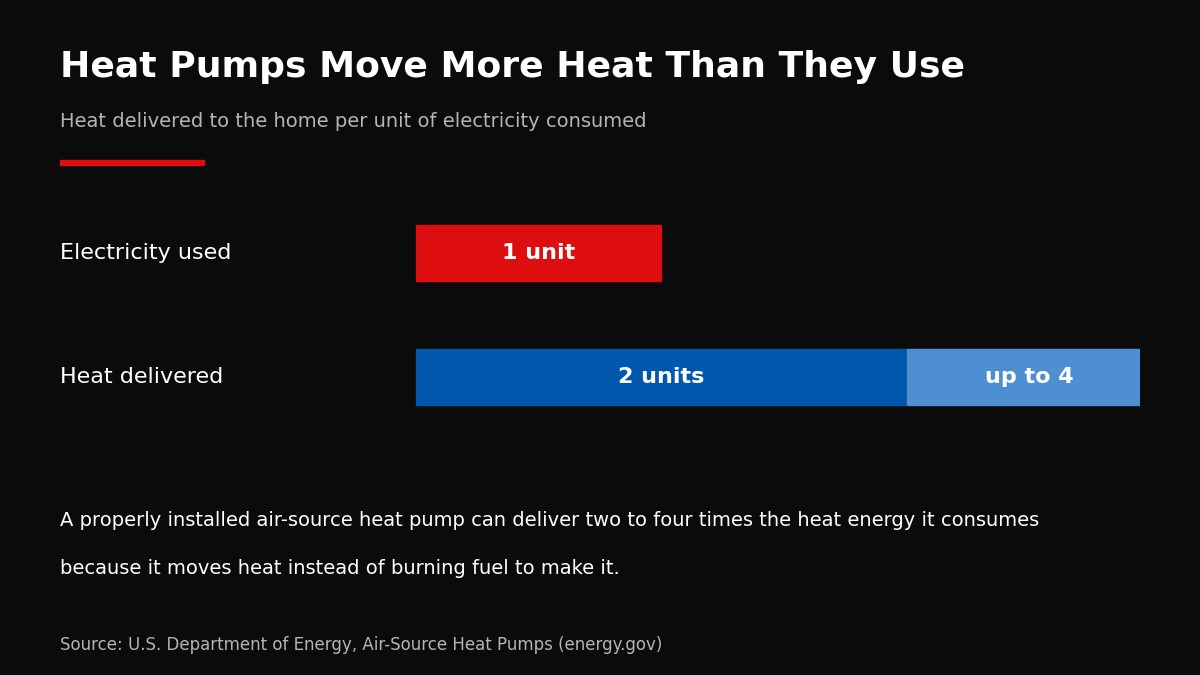
A heat pump does not generate heat the way a gas furnace does. Instead of burning fuel, it pulls heat from the outdoor air and moves it inside using refrigerant, the fluid that carries heat between the outdoor and indoor coils. It uses the same physics as your refrigerator, working in the opposite direction. According to the U.S. Department of Energy, a properly installed air-source heat pump can deliver two to four times more heat energy to a home than the electrical energy it consumes, because it moves heat rather than converting fuel into it.
That efficiency comes with a trade-off you can feel at the register. Most of the time, cold air from a heat pump falls into one of two normal categories, or one of several repair categories. The first step is understanding the normal ones.
Heat Pump Air Is Naturally Cooler Than Furnace Air
Furnace air commonly leaves the register at well over 120°F. Heat pump air typically lands closer to 90 to 100°F. That air is technically warm, but it sits near or below skin temperature. When it moves across your hand or your neck, it can register as cool or drafty even while the system steadily raises the temperature of the house. The room is getting warmer, just not with the blast of heat a gas system announces itself with. For homeowners switching from a furnace for the first time, this sensation is almost always the first surprise.
Undersized Ductwork Can Make Air Feel Colder
Heat pumps move more air at lower temperatures than furnaces do, so they depend on ductwork that can carry that volume. When ducts are undersized or restricted, the same airflow has to squeeze through smaller openings and leaves the register at higher speed. Fast-moving air creates a wind-chill effect on your skin, so a stream that is actually warm can feel cold. Homeowners often describe this as cold air when what they are noticing is velocity. This is one reason a technician should evaluate existing ducts before a heat pump replaces a furnace.
| What You Feel | Likely Explanation | Normal or Problem? |
|---|---|---|
| Mild, steady warmth that feels cooler than furnace heat | Normal heat pump supply air temperature | Normal |
| Cool air for a few minutes with the outdoor fan stopped | Defrost cycle without enough backup heat to temper the air | Normal if brief |
| Strong, drafty airflow that feels cool | Undersized or restricted ducts raising air speed | Worth evaluating |
| Cold air for hours while the house keeps cooling | Stuck reversing valve, low refrigerant, or failed backup heat | Problem |
| Outdoor unit covered in a thick block of ice | Defrost failure or refrigerant problem | Problem |
Normal Heat Pump Operation Versus a Real Heating Problem
A heat pump is an interconnected system where airflow, refrigerant charge, and electrical controls all have to work together. When one element drifts out of spec, the effect shows up at the register, which is why diagnosing from the vent alone is unreliable. Some cool air is temporary and built into the design. Other cool air is a warning that something has failed.
Signs Your Heat Pump Is Working Normally
- Register air that feels warm but not hot, especially compared with furnace heat.
- Brief periods of cooler air lasting several minutes, often with a hissing sound, steam from the outdoor unit, or the outdoor fan stopping. This is usually a defrost cycle.
- Long, steady run times on cold days, particularly on variable-capacity systems that adjust compressor speed instead of cycling on and off.
- The house slowly recovering to the thermostat setting after a defrost cycle ends.
Signs of a Real Heating Problem
- Cold air that keeps blowing for hours with no recovery.
- Indoor temperature steadily dropping below the thermostat setting while the system runs.
- The outdoor unit encased in thick, solid ice rather than a light frost.
- Loud grinding, squealing, or electrical buzzing from the indoor or outdoor unit.
- Hissing or bubbling near the refrigerant lines, which can point to a leak.
If the system keeps blowing cold air and the house keeps losing temperature, stop guessing. A technician providing heat pump diagnostics and service can identify what is failing before any parts are ordered, which protects you from paying for a repair you did not need.
When Cold Air Requires Professional Heat Pump Repair

Some causes of cold air are mechanical, and they call for specialized tools and training. Three show up most often.
A Stuck Reversing Valve
The reversing valve switches your system between heating and cooling. When it works, you never think about it. When it sticks, the heat pump can stay locked in cooling mode, meaning it runs all day in January and pumps cold air into the house as efficiently as it would on a July afternoon. Homeowners often cycle through thermostat settings for hours before realizing the problem is mechanical. Freeing or replacing this valve involves refrigerant lines and electrical controls, so it is not a do-it-yourself repair.
Low Refrigerant From a Leak
A heat pump depends on a precise refrigerant charge. When a leak lowers it, the system cannot gather enough heat from the outdoor air, and register air drifts from warm to tepid to cold. A low charge can also cause the outdoor coil to freeze rapidly, which compounds the heating failure and can eventually damage the compressor. Handling refrigerant requires EPA Section 608 certification and recovery equipment, so homeowners should never add it themselves.
Failed Backup Heat and Control Problems
Backup heat, usually electric resistance strips, supports the heat pump on the coldest days and tempers the air during defrost. When the strips fail, every defrost cycle and cold snap delivers noticeably cool air. Wiring or control board faults can also break communication between the thermostat and the outdoor unit so the compressor never engages at all.
| Failure | What It Looks Like | DIY or Professional? |
|---|---|---|
| Stuck reversing valve | System runs but blows air-conditioner-cold air | Professional |
| Low refrigerant charge | Weak heating, frozen outdoor unit, hissing near lines | Professional |
| Failed backup heat strips | Cold air during defrost and cold snaps | Professional |
| Control or wiring fault | Compressor does not start, thermostat and outdoor unit out of sync | Professional |
| Clogged filter or blocked outdoor unit | Weak airflow, system shutting down early | Homeowner can check first |
How Outdoor Temperature Changes Supply Air Feel
As outdoor temperatures fall, a heat pump has less heat to pull from the air, and its capacity drops. That is normal physics. The system compensates with longer run times and, when it cannot keep up, with backup heat. If the backup heat works, you may feel slightly cooler air for a short period before the house recovers. If it does not work, the house keeps falling behind the thermostat, and the air from the registers feels cooler than it did in milder weather.
Backup heat comes in two common forms: electric resistance strips in an all-electric system, or a gas furnace in a dual-fuel setup. Homeowners weighing a gas furnace backup should know that dual-fuel systems can switch to the furnace at a set outdoor temperature, which keeps supply air hot on the coldest nights. Cold climate heat pumps extend the range even further. ENERGY STAR notes that certified cold climate models continue working below 5°F, though pairing them with a backup source is the most efficient approach when temperatures drop even lower.

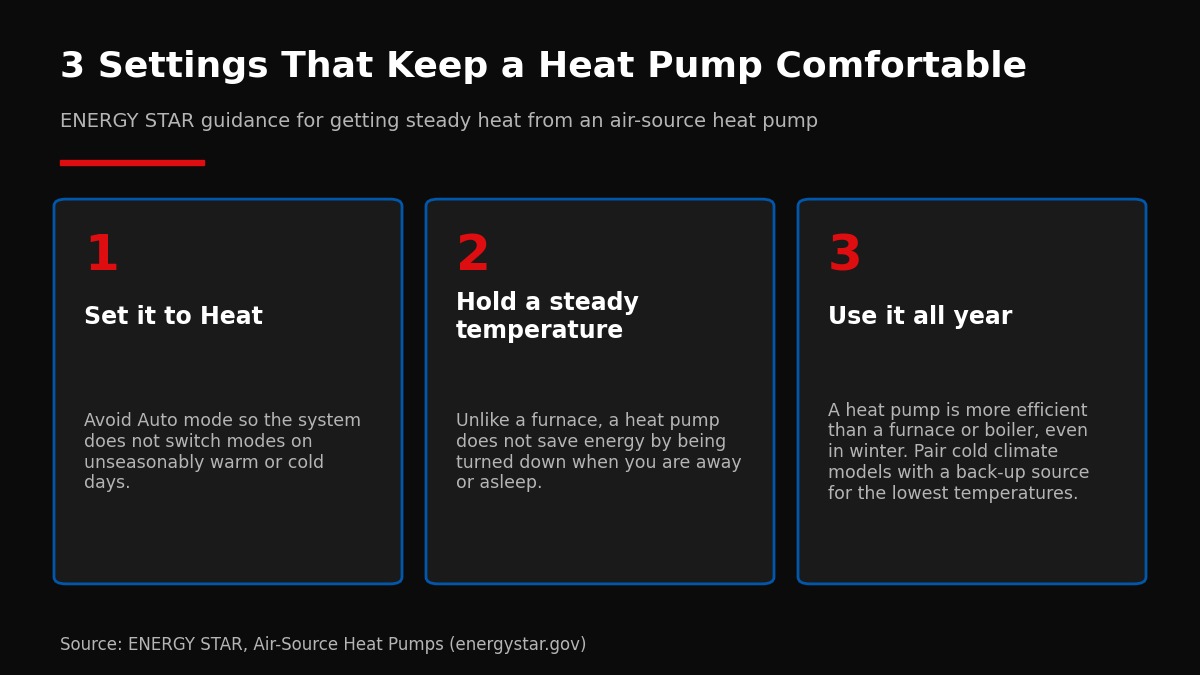
Settings matter too. ENERGY STAR recommends keeping the thermostat on Heat rather than Auto and holding a steady temperature, because heat pumps do not save energy by being turned down the way furnaces do. Frequent large thermostat swings can push the system into backup heat more often, which raises your bill and changes how the air feels.
Defrost Cycles and Temporary Cool Air
When outdoor temperatures drop and the air is damp, moisture freezes on the outdoor coil. Left alone, that ice would choke the coil and stop the system from absorbing heat. The defrost cycle is the heat pump’s answer, and it comes with a short-term trade-off that surprises many homeowners.
What Happens Inside the System During Defrost
- The system briefly reverses into cooling mode so warm refrigerant flows to the outdoor coil and melts the ice.
- The outdoor fan usually stops, and you may see steam rising from the unit.
- Because the indoor coil is cooling during this time, cool air would reach your rooms unless backup heat strips switch on to temper it.
- If backup heat is disabled, failing, or absent, the defrost cycle sends cool air straight into the house.
A normal defrost cycle lasts a few minutes, and it rarely runs longer than about 15. Cold air that continues well beyond that window points to a real problem rather than normal operation. The U.S. Department of Energy also advises choosing a heat pump with demand-defrost controls, which start a cycle only when frost has actually built up and so reduce unnecessary defrosting. Keeping up with a seasonal maintenance visit lets a technician confirm that the backup heat strips and defrost controls work before the first hard freeze.
Fix a Heat Pump Blowing Cold Air With These Checks First
A few simple checks cost nothing and sometimes solve the problem:
- Confirm the thermostat mode. It should be set to Heat, with the fan on Auto. When the fan is set to On, it circulates unheated air between heating cycles, which creates a steady cool draft.
- Replace a dirty filter. A clogged filter restricts airflow and can make the system shut down its heating early. Better air filtration options work well as long as the system can still move enough air through them.
- Clear the outdoor unit. Remove snow, ice, leaves, and debris from around it. Most manufacturers call for roughly two feet of open space, so check your owner’s manual for the exact clearance.
- Check all registers and return grilles. Make sure none are blocked by furniture or closed off.
- Watch one full cycle. If the cool air lasts only several minutes and the outdoor fan stops, you are probably seeing a defrost cycle.
If these checks come up clean and the air stays cold, the cause is most likely a failed reversing valve, a refrigerant leak, or broken backup heat. All three need professional tools to diagnose and repair safely.
Frequently Asked Questions About a Heat Pump Blowing Cold Air
How do I fix my heat pump blowing cold air?
Is it normal for a heat pump to blow cool air during defrost?
Why does my house feel cold with a heat pump?
What outside temperature is too cold for a heat pump?
Should I use emergency heat when my heat pump blows cold air?
Why is my heat pump blowing cold air even though it is set to heat?
Get Reliable Heat From Your Heat Pump Again
Understanding how a heat pump works, what temperature of air it delivers, when it runs defrost cycles, and what backup heat is supposed to do removes most of the worry that comes with feeling cold air from a heating system. Most of the time the system is doing its job. When it is not, the failure modes are specific and diagnosable.
If your system is aging, cycling without holding the set temperature, or needing repeated repairs, replacing it may make more sense than another service call. Exploring a new heat pump system can lower utility costs and give you modern variable-capacity controls and better backup heat integration than older units offer. Whether you need a diagnosis, a repair, or a replacement, reach out to our heating and air team and get a straight answer before the next cold night.