


Hydro Jetting vs Snaking: Which Clears Drains Better?
When a drain slows down or backs up, the choice often comes down to hydro jetting vs snaking. Both methods are used by professional plumbers to clear clogs, but they work in very different ways, they cost different amounts, and they leave your pipes in different condition afterward. Knowing which one fits your situation can save you money, time, and a second service call a few weeks later.
Whether you are dealing with grease in a kitchen line, roots in an outdoor sewer, or a drain that keeps slowing down no matter what you try, the right method depends on what is actually inside the pipe. At Schneider Plumbing, Heating & Air Conditioning, we use both methods, so here is an honest look at how each one works and when each one makes sense.
Hydro Jetting vs Snaking: How Each Method Works
How Drain Snaking Works
A drain snake, also called an auger, is a flexible metal cable with a coiled or bladed tip. A plumber feeds the cable into the pipe until it reaches the clog, then rotates it to break the blockage apart or hook onto it so it can be pulled out. Hand-cranked snakes handle sinks and tubs, while motorized augers reach farther into larger drains and sewer lines.
Snaking is a good fit for simple, localized obstructions such as hair, paper, or soft debris. It restores flow quickly, but it mostly cuts a channel through the clog rather than cleaning the pipe. Grease, scale, or sludge on the pipe walls can stay behind and cause the next blockage.
How Hydro Jetting Works
Hydro jetting uses high-pressure water to scour the inside of the pipe. A plumber feeds a hose with a specialized nozzle into the line, and the nozzle sprays water at pressures commonly ranging from about 1,500 to 4,000 PSI, with the exact setting chosen to suit the pipe. The spray cuts through grease, scale, sludge, and small roots, then flushes the debris down the line.
The key difference is that jetting cleans the whole pipe wall instead of poking a hole through the middle of a clog. It uses water instead of chemicals, and because it removes the buildup that causes clogs, results tend to last longer.
Hydro Jetting vs Snaking: Side-by-Side Comparison
| Factor | Drain Snaking | Hydro Jetting |
|---|---|---|
| How it works | Cable breaks up or pulls out the clog | High-pressure water scours the pipe walls |
| Best for | Hair, paper, soft or isolated clogs | Grease, scale, sludge, roots, recurring clogs |
| Cleans pipe walls | Partially | Thoroughly |
| Typical cost | $150 to $350 | $350 to $600, more for long or severe jobs |
| Longevity of results | Often temporary if buildup remains | Typically longer lasting |
| Fragile or damaged pipes | Lower pressure risk, but still needs care | Needs inspection first |
Hydro Jetting vs Snaking for Grease, Scale, and Roots
Different clogs call for different tools, and what is inside your pipe is the deciding factor.
Grease Buildup
Grease coats the inside of a pipe and narrows it over time. A snake can punch a hole through the middle, which restores drainage for a while, but the coating remains and the clog tends to return. Jetting scrubs the grease from the entire length of the pipe, which is why it is usually the better answer for kitchen lines that keep backing up.
Mineral Scale
Hard water leaves mineral deposits that harden and shrink the pipe opening. A snake cannot remove those deposits effectively. Jetting can break them loose and flush them out, which often improves drainage and flow. If hard water is behind the buildup, a water softener installation helps keep scale from coming back after the pipes are cleaned.
Tree Roots
Roots find their way into outdoor sewer lines through joints and small cracks. A snake with a cutting head can slice through thin roots, but it leaves the cut ends in place and they regrow. Jetting can cut roots and wash the debris away, so the line stays clear longer. If roots have already cracked or shifted the pipe, a camera inspection and repair should come before any aggressive cleaning, and that is where sewer line repair comes in.
Is Hydro Jetting Safe for Your Pipes?
When it is performed by a trained plumber, jetting is generally safe for sound, modern plumbing such as PVC, copper, and cast iron. The risk comes from pipes that are already weakened. Old clay lines, brittle or heavily corroded pipe, and sections that have cracked or collapsed may not tolerate high pressure, so a skilled technician adjusts the pressure to the pipe or skips jetting entirely if the line is not sound.
Snaking puts less pressure on a pipe, but it is not risk-free. A cable that is forced or misused can scratch or puncture fragile pipe, so careful technique matters with either method.
When a Camera Inspection Comes First
A video camera inspection lets your plumber see the blockage and the pipe before choosing a method. It is especially worth doing when:
- Clogs keep coming back: repeat blockages after snaking can point to roots, a belly in the line, or a damaged pipe.
- Your plumbing is older: clay, galvanized steel, and Orangeburg (bonded tar paper) pipe are more vulnerable to damage.
- Several drains are slow at once: that usually points to the main line rather than a single fixture.
- You notice gurgling or sewage odors: these suggest a partial blockage or a venting problem.
The inspection shows whether jetting is safe, whether snaking is enough, or whether the line needs repair before it is cleaned.
Hydro Jetting vs Snaking Costs
Drain Snaking Cost
Snaking typically runs $150 to $350, depending on how accessible the clog is and how far into the system it sits. A bathroom sink or tub usually lands at the low end, while a main sewer line costs more. It is the usual first step for a minor clog because it is fast and inexpensive. The catch is that it is often a short-term fix if buildup remains on the pipe walls.
Hydro Jetting Cost
Hydro jetting generally costs $350 to $600 for a typical residential job, and long runs or severe blockages can reach $1,000 or more. The higher price reflects specialized equipment and training, and many homeowners find the longer-lasting result worth it.
Which Costs Less Over Time?
Snaking is cheaper per visit, but a line that needs snaking every few months can cost more over a year than a single thorough jetting. If your clogs are occasional and simple, snaking is the economical choice. If they are frequent, grease-related, or tied to roots and scale, jetting often costs less in the long run because it removes the cause instead of the symptom.
When Snaking Makes Sense and When Jetting Does
When Snaking Is the Better Choice
- Minor, isolated clogs: hair in a bathroom sink or soft debris in a single fixture.
- First-time blockages: no history of repeat problems.
- Fragile or questionable pipes: older lines that may not handle high pressure.
- Quick, budget-friendly fixes: when you just need water moving again.
When Hydro Jetting Is the Better Choice
- Recurring clogs: especially from grease, sludge, or roots.
- Heavy-use kitchens: where grease builds up quickly.
- Multiple slow drains: signaling buildup through a larger part of the system.
- Preventive maintenance: on sound older sewer lines with a history of buildup.
Many plumbers combine the two. A snake may restore flow first, and jetting follows to clean the pipe so the clog does not return. Professional drain cleaning starts with finding out what is actually in the line, then matching the method to it.
Why Recurring Clogs Deserve a Lasting Fix
What Sewer Overflow Data Tells Us
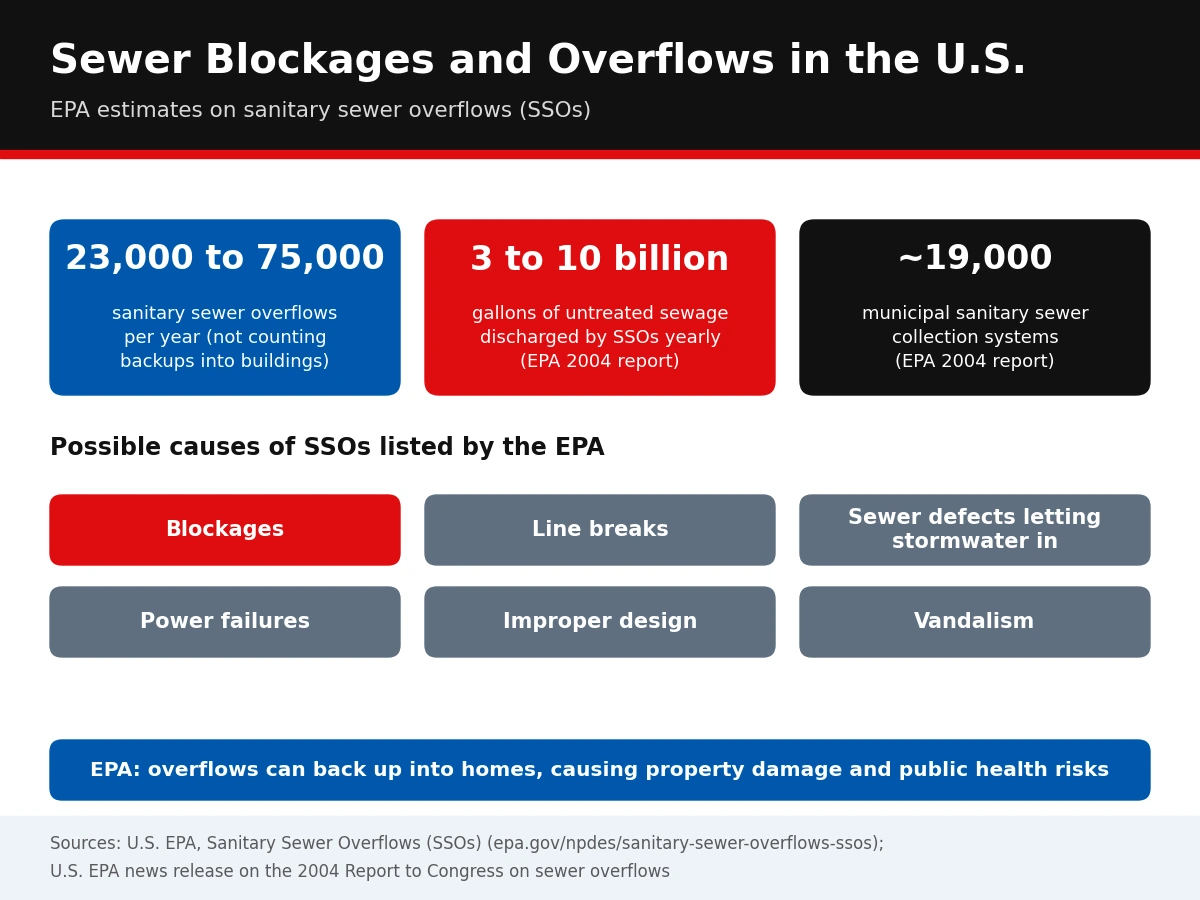
A blockage that stays in place does not just slow a drain. Blockages are the first cause the EPA lists for sanitary sewer overflows, and the agency estimates there are at least 23,000 to 75,000 of them each year in the U.S., not counting sewage backups into buildings. The EPA notes that overflows can back up into homes, causing property damage and threatening public health. In its 2004 Report to Congress, the EPA estimated those overflows discharge roughly 3 to 10 billion gallons annually.
Sources: U.S. EPA, Sanitary Sewer Overflows and the EPA’s 2004 Report to Congress news release
Aging Pipes and Root Intrusion
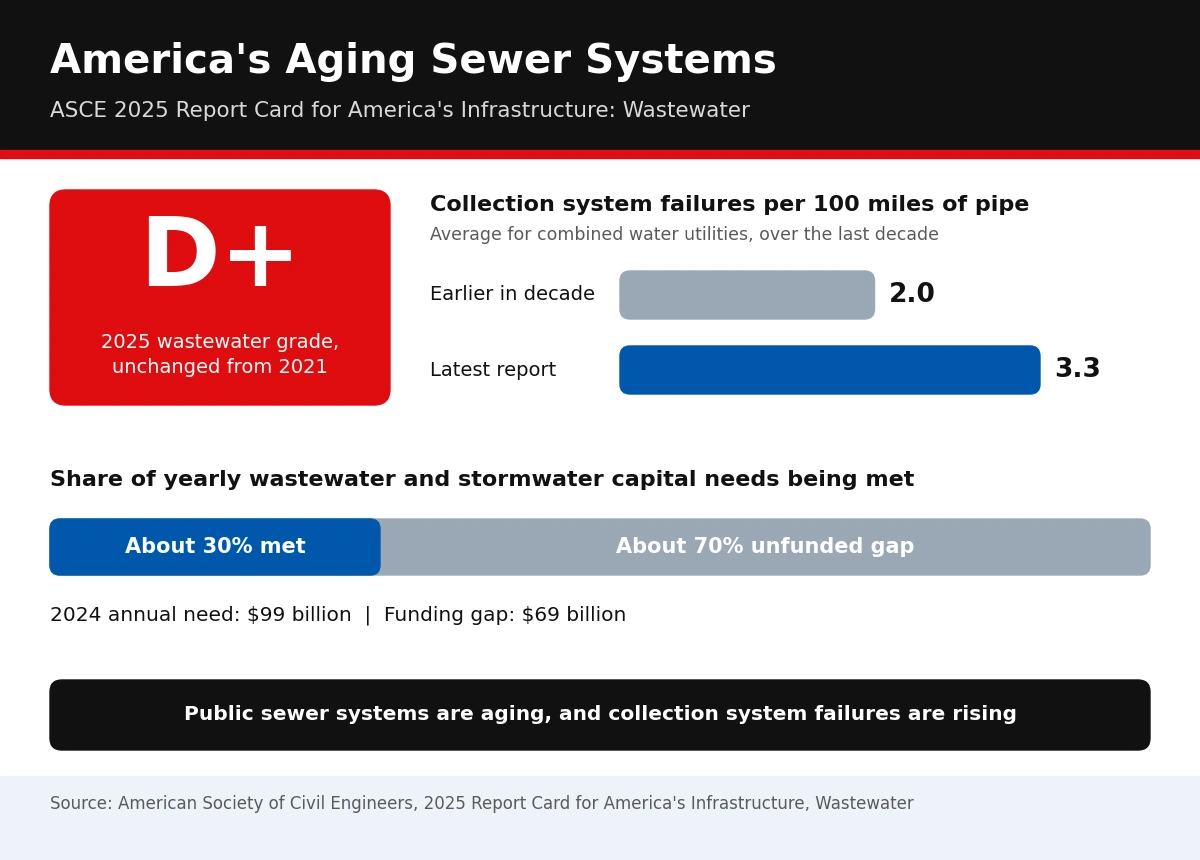
Older pipes are more likely to have cracks, offset joints, and rough interior surfaces where grease and roots take hold. The American Society of Civil Engineers gave the nation’s wastewater infrastructure a D+ in its 2025 report card, and it noted that collection system failures at combined water utilities rose from 2 to 3.3 per 100 miles of pipe over the past decade. That data covers public systems, but the same aging trend applies to the lines running through many homes.
Source: American Society of Civil Engineers, 2025 Report Card for America’s Infrastructure
If your home is older and your drains keep slowing down, that history matters. A camera inspection can show whether you are dealing with simple buildup or a pipe that needs more than cleaning.
Preventing Future Clogs
Safe Everyday Habits
- Keep grease out of the drain: let cooking fat cool and put it in the trash. Hot water only moves grease farther down the line, where it hardens again.
- Use drain strainers: catch hair and food scraps before they enter the pipes.
- Scrape plates before washing: garbage disposals chop food, but they do not remove grease from the line.
- Skip chemical drain cleaners: they are caustic, and the U.S. Consumer Product Safety Commission lists drain cleaners among household products that can cause chemical burns. They can also stress older pipes.
If your kitchen sink drains slowly or the disposal keeps jamming, garbage disposal repair can rule out a mechanical problem before you assume the line is clogged.
Routine Professional Cleaning
Most homes do fine with a professional cleaning every year or two, and busy kitchens or homes with a history of buildup may benefit from more frequent service. A plumber can alternate between snaking and jetting based on what the line needs. Some homeowners with older sewer lines or recurring grease and root problems also choose preventive jetting every few years, but it is best done after a camera inspection confirms the pipe is sound.
Work With a Plumber Who Explains the Options
Choosing between jetting and snaking is not one-size-fits-all. A good plumber will look at the line, show you what they found, and explain why they recommend one method over the other. An experienced licensed plumbing contractor will give you a straight recommendation and a clear price before work begins.
Hydro Jetting vs Snaking FAQs
Is hydro jetting better than snaking?
How much does hydro jetting cost compared to snaking?
Can hydro jetting damage pipes?
How often should drains be hydro jetted?
Does hydro jetting remove tree roots?
Why do my drains keep clogging after snaking?
Do I need a camera inspection before hydro jetting?
Keep Your Drains Flowing
The better method is the one that matches the clog. Snaking works well for a simple blockage, and jetting is the stronger answer for buildup, roots, and drains that will not stay clear. Once you know what is in your pipes, the decision is much easier and the results last longer.
Schneider has been family-owned since 1948, and we would rather fix the cause of a clog than keep coming back for the symptom. If your drains are slow or keep backing up, schedule a drain inspection with our team and we will recommend the right method for your home.