



What Causes Uneven Heating in a House? (And How to Fix It)
If you keep wondering why one room feels like a different building, you are dealing with uneven heating in a house, and you are far from alone. The thermostat reads 70°F, the living room keeps up, and the bedroom down the hall stays stubbornly cold. That gap is a symptom, and it rarely means the furnace is dying. In most homes the heating equipment is doing its job. The trouble lies in how warm air travels through the house, where it escapes before it arrives, and whether the walls, ceilings, and floors hold the heat once it gets there. The technicians at Schneider Plumbing Heating & AC hear this complaint every winter, and understanding these three layers is how you reach a real fix without replacing equipment that still has years left.
What Causes Uneven Heating in a House?
A home works as one connected thermal system. When a single room runs colder than the rest, the cause almost always falls into one of three groups: airflow restrictions, thermal boundary failures such as insulation gaps, or design errors baked in at installation. Even a brand-new furnace produces uneven results if any of these conditions exist.
Airflow Problems Inside the Duct System
Think of your ductwork like the branches of a tree. If some branches are blocked, leaking, or too small, the rooms at the far ends never get their share. Heat also behaves predictably. Warm air rises, which is why second floors tend to run warm while basements stay cool, and that natural layering gets worse whenever the distribution system has gaps.
Thermal Boundary Failures
Your walls, windows, attic, and floors form the thermal boundary of the house. When insulation is thin or air leaks around the envelope, a room can lose heat faster than the furnace can replace it. That room feels cold even though warm air is arriving at the register.
Design and Sizing Errors
Some comfort problems are built in. A furnace that is too large or too small, or ductwork that was never engineered for the layout it serves, will never deliver balanced heat. No thermostat setting can fix a distribution system that was designed incorrectly.
How Ductwork and Airflow Create Hot and Cold Rooms
Ducts are the most common source of room-to-room differences. According to ENERGY STAR, about 20 to 30 percent of the air moving through a typical duct system is lost to leaks, holes, and poorly connected ducts. That means a large share of the heat your furnace makes never reaches the room it was meant for.
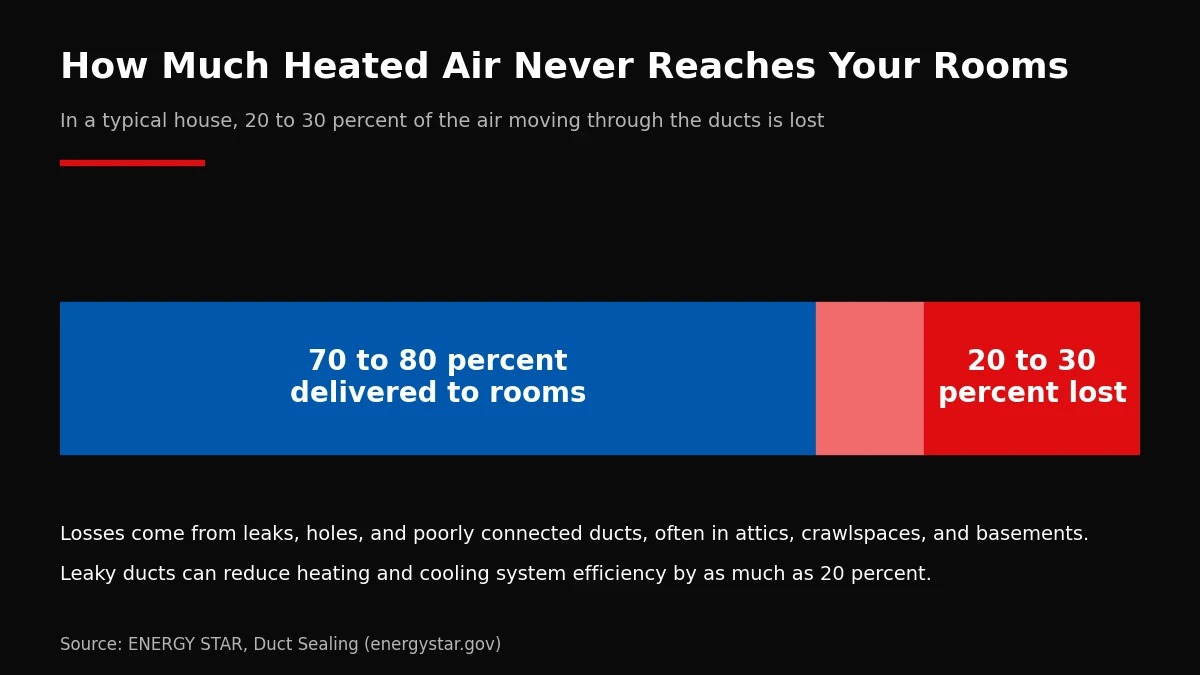
Ducts that run through unconditioned spaces such as attics, crawlspaces, and unfinished basements lose the most. Return ducts matter just as much as supply ducts. When a return leaks, the system cannot pull back the air it needs, and the rooms farthest from the furnace pay the price first. Poor installation is behind much of this, including loose connections, missing sealant, and flexible duct that sags or kinks.
Four failure modes account for most uneven heating complaints:
| Cause | What You Notice | Typical Fix |
|---|---|---|
| Leaky supply ducts | Cold rooms at the end of long duct runs, higher heating bills | Seal joints with mastic or foil tape and insulate ducts in unconditioned spaces |
| Return air starvation | Bedrooms get cold with the door closed | Add return pathways, jump ducts, or door undercuts |
| Crushed or sagging flex duct | One register with weak or no airflow | Replace or re-support the damaged duct run |
| Low system airflow | Weak airflow at every register, longer run times | Replace the filter, clean the blower, check the blower motor |
Return air starvation deserves a closer look. A bedroom with the door shut and no return path builds positive pressure, which physically blocks new warm air from entering. The furnace runs, the register blows, and the room still stays cold because the air has nowhere to go. A pinched or crushed flexible duct acts like a kink in a garden hose, and a technician who handles furnace blower and airflow repairs can usually spot the restriction quickly once airflow is measured at each register.
When Uneven Temperatures Point to a Heating System Problem

Sometimes the distribution system is only part of the story. Equipment capacity, sizing, and configuration can all contribute to room-by-room temperature gaps. Well-designed installations follow standards from the Air Conditioning Contractors of America: Manual J for load calculations, Manual S for equipment selection, and Manual D for residential duct design. When those steps are skipped or estimated, the result is a furnace that is too big or too small, connected to ductwork that was never engineered for balanced airflow. Choosing a right-sized furnace replacement matters as much as the brand on the cabinet, and getting the size wrong creates comfort problems that no thermostat adjustment can solve.
High-efficiency equipment adds a twist. Variable-speed furnaces are designed to smooth out comfort, but when duct problems already exist, running at a lower airflow setting can make imbalances more noticeable at the far rooms. The equipment is not at fault in that case. It is exposing a distribution problem that a single-speed furnace was hiding.
Four equipment-related patterns show up repeatedly during uneven heating diagnostics:
- Short-cycling equipment: An oversized furnace heats the air near the thermostat quickly and shuts off before warm air can travel to upstairs or distant rooms.
- Failing blowers or clogged filters: Low airflow from dirty filters, blocked coils, or a weak blower motor keeps the system from pushing air to the ends of long duct runs, so the farthest rooms go cold first.
- Debris buildup: Dust in the blower wheel restricts airflow gradually, turning a once-balanced home into a patchwork of warm and cool zones without any single dramatic failure.
- Thermostat in the wrong spot: A thermostat near a sunny window, kitchen appliance, or drafty door reads the wrong temperature and shuts the system off before the rest of the house catches up.
“We were so pleased with the service Dristin & Alex from Schneider’s Plumbing provided for us. We called late in the day, but they were at our home within half an hour and took care of the problem. The guys were polite & got everything done in a timely manner.” – Barbara Hayes
How to Fix Uneven Heating in Your Home
Before calling anyone, a few checks are worth running yourself. They cost nothing and often solve milder cases.
Fix Uneven Heating in a House Without Replacing Your Furnace
Most cases can be corrected without new equipment. Work through this list in order:
- Replace the air filter. A clogged filter restricts airflow across the whole house, not just one room. Upgrading to cleaner air filtration options is fine, as long as the system can still move enough air through them.
- Clear every register and return grille. Furniture, rugs, and heavy drapes sitting on or in front of vents block airflow more often than people expect.
- Keep interior doors open. Open doors let return air circulate, which keeps pressure balanced between rooms.
- Look for damper levers on duct branches. Where ducts are accessible in a basement or utility area, small levers can be adjusted to send more air toward cold rooms. Mark the starting position so you can return it if needed.
- Check visible ductwork. Look for gaps, loose joints, and disconnected sections in the basement or attic.

Regular maintenance prevents many of these issues from developing. A seasonal seasonal tune-up gives a technician the chance to check airflow rates, clean the blower wheel, and catch developing restrictions before they turn into expensive failures.
If you have adjusted dampers and replaced the filter but certain rooms still feel like iceboxes, hidden duct leaks or airflow imbalances are the likely cause, and they are quietly raising your utility bills every month the problem continues.
Advanced Solutions: HVAC Zoning and Insulation Gaps
Why Closed Vents Can Make Temperature Imbalances Worse
Closing vents in unused rooms to push heat elsewhere is one of the most persistent myths in home comfort. Your system is engineered to move a specific volume of air through a specific duct layout. Closing vents raises static pressure inside the ductwork, and that pressure pushes more air out through every existing gap and seam. The blower works harder against the added resistance, efficiency drops, and the extra strain can contribute to overheating and shorter equipment life. That is a far more expensive problem than the cold bedroom you were trying to fix.
Insulation and Air Leakage Around Problem Rooms
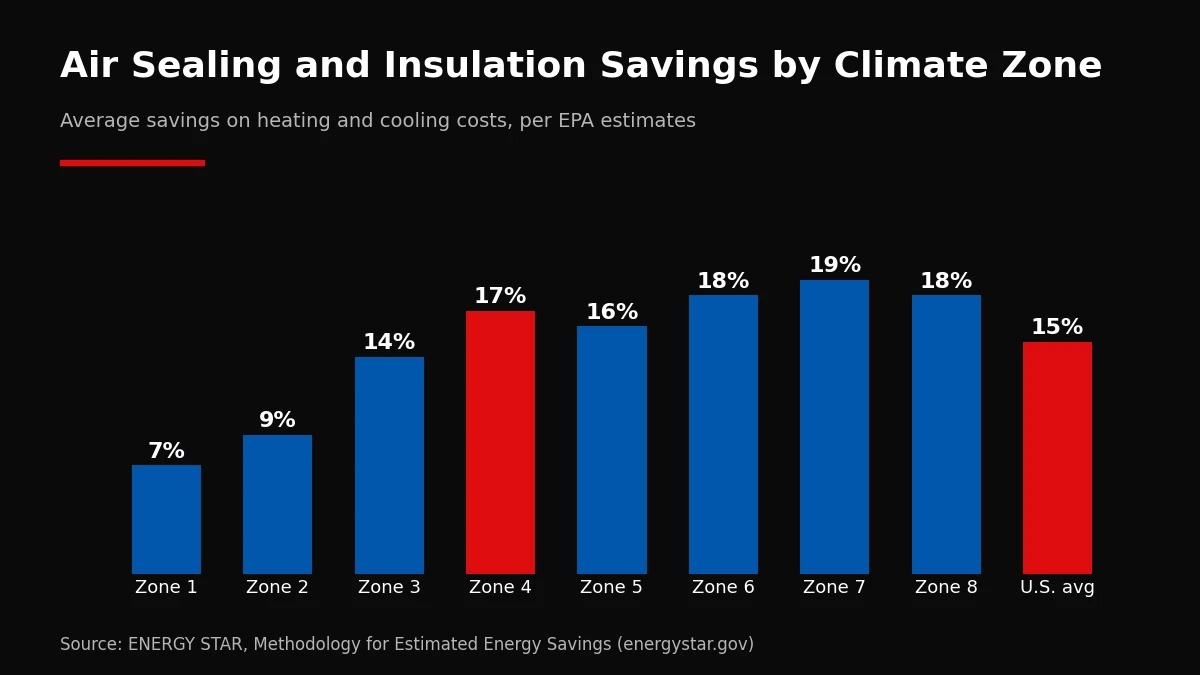
Not every cold room is an HVAC problem. A room over an uninsulated crawlspace, a room with drafty windows, or a room under a thin or compressed attic blanket loses heat faster than any furnace can replace it. The EPA estimates that homeowners save an average of 15 percent on heating and cooling costs by air sealing a home and adding insulation in attics, floors over crawl spaces, and basements, according to ENERGY STAR guidance on sealing and insulating. The savings are larger in colder climates, and the comfort gain shows up first in the rooms that were hardest to heat.
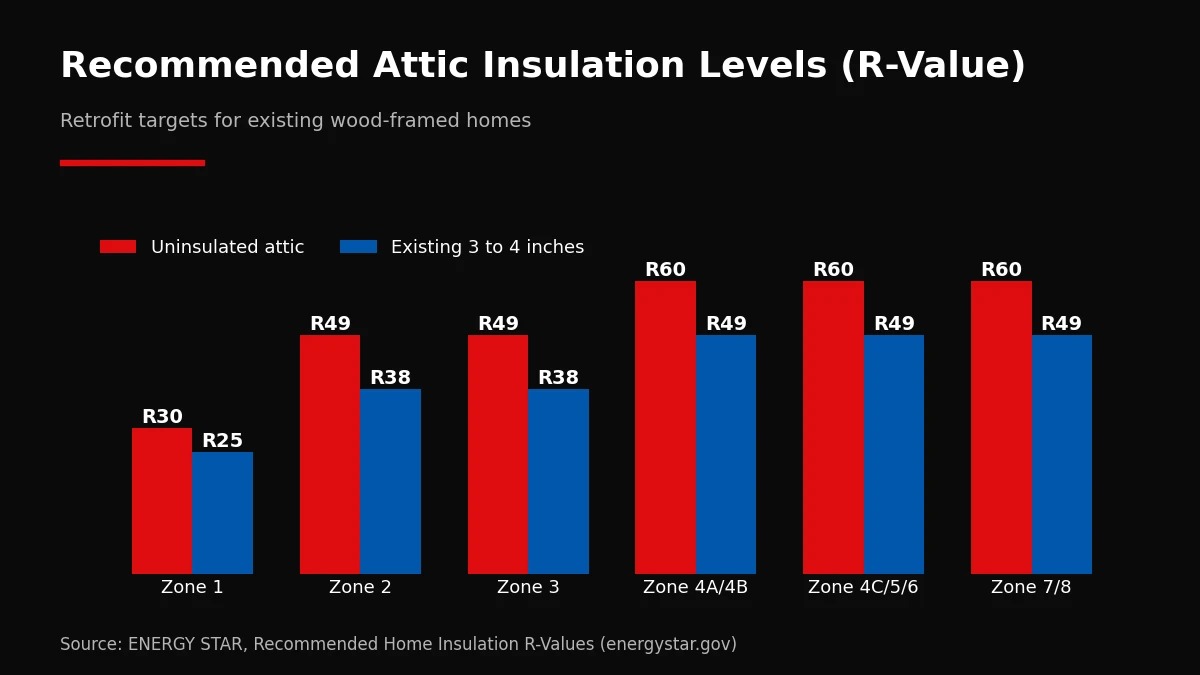
Attic insulation deserves special attention because warm air rises and escapes upward. Older homes often have far less insulation than current recommendations, which means a meaningful share of the heat your furnace produces leaves through the ceiling before it warms the room below. ENERGY STAR publishes retrofit targets by climate zone, shown below. In its current guidance, zones 4A and 4B call for R60 in an uninsulated attic and R49 where 3 to 4 inches already exist.
How HVAC Zoning Can Improve Room-by-Room Comfort
For multi-level homes or sprawling layouts where duct balancing alone cannot close the comfort gap, zoning offers a targeted path forward. A zoned system uses motorized dampers inside the ductwork and multiple thermostats to control temperatures independently in different areas of the house. Neither option requires replacing a working furnace, because zoning works alongside the equipment you already own.
Persistent problem areas such as finished basements, sunrooms, and bedrooms over garages are often better served by ductless mini-split systems. They deliver heating and cooling directly to the room without extending or rebalancing the main duct system, which is often impractical or too costly in older homes.
Signs Your Uneven Heating Needs Professional Testing
Solving uneven heating is a process of elimination. Duct leaks, airflow imbalances, insulation gaps, and equipment sizing errors each need a different fix, and they often appear in combination. Visual inspection alone rarely locates the problem. Measuring airflow at each register, testing duct leakage, and checking static pressure are the only reliable ways to know which cause is driving your cold rooms. Use this table to match what you see with the likely source:
| Symptom | Most Likely Source | Who Should Handle It |
|---|---|---|
| One room always cold, others fine | Blocked or leaking branch duct, or missing return path | Homeowner check first, then a technician |
| Upstairs warm, downstairs cold | Natural air layering plus duct imbalance | Technician for balancing or zoning |
| Cold rooms and rising heating bills | Duct leakage in unconditioned spaces | Technician for duct testing and sealing |
| Furnace turns on and off quickly | Oversized equipment or restricted airflow | Technician for sizing and airflow review |
| Cold room with drafts at windows or floor | Air leakage or low insulation | Insulation or air sealing contractor |
A contractor who relies on testing and measurement, rather than guesswork, can tell you which of these is behind your problem and what it will realistically cost to correct. If the cold rooms started suddenly, a failing blower or a disconnected duct is more likely than a design flaw. If you also notice unusual noises or weak airflow across the house, an experienced team handling diagnosing and fixing heating problems can pinpoint the cause quickly.
Frequently Asked Questions About Uneven Heating
Why is one room colder than others?
Does closing vents cause uneven heating?
How does thermostat placement affect room temperature?
Can leaky air ducts cause uneven heating?
How do I troubleshoot uneven heating in my home?
Is it worth adding zoning or a mini-split to fix cold rooms?
Get Even Heat in Every Room
Uneven heating is one of the most common comfort complaints homeowners raise, and it is also one of the most fixable. In most cases the furnace is not the problem. The distribution system, the building envelope, or both are. Testing and honest diagnostics separate a real fix from a temporary patch. If you are ready to stop living with cold bedrooms and drafty spaces, reach out to our heating and air team to schedule an airflow assessment and get a straight answer with an honest, upfront estimate.